- The Core
- Posts
- Rationing In Times Of War
Rationing In Times Of War
In partnership with

Good Morning. India has been resetting its gas supply priorities. With the West Asia conflict having blocked LNG flows, policymakers and gas distributors are trying to protect household cooking gas and CNG supplies. But that also means industry is first in line for cuts. Several industries, such as ceramics and chemicals, have already reported reduced gas allocations as suppliers scramble to manage shrinking imports and soaring global prices.
India's equity indices ended on a low not on account of the war. The BSE Sensex closed at 77,566.16, losing 1,352.74 points or 1.71%. The NSE Nifty50 closed at 24,028.05, losing 422.40 points or 1.73%
In other news, crude prices hit record highs, but the government says it won’t impact inflation in India. Meanwhile, Bangladesh shuts educational institutions amid an energy crisis.
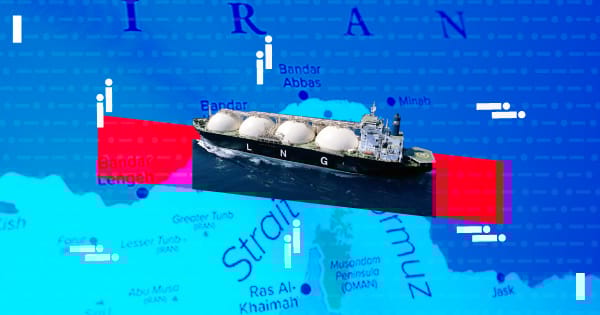
India Shields Homes From Gas Crisis As Industry Bears Hormuz Shock
What?
India’s natural gas supply chain has grappled with a wave of force majeure declarations as the escalating conflict in West Asia has disrupted critical energy trade routes.
A common theme during this time from all stakeholders, be it the government, suppliers or distributors, is to prioritise the retail consumer.
While the government and city-gas distributors (CGDs) want to insulate households, the complexity of international pricing and India's heavy reliance on imports that come through the Strait of Hormuz has made total price protection challenging.
Why?
In January, a month before the tensions, India’s total consumption of natural gas was at 5,252 million metric standard cubic metres (MMSCM). This is consumed across multiple industries — fertilisers, power, CGDs and others.
Approximately 54% of this, or 2,825 MMSCM, is met through liquified natural gas (LNG) imports. According to Crisil, more than 50% of India’s imported LNG passes through the Strait of Hormuz.
However, there is a domestic cushion, with close to half of India’s natural gas requirements that are unlikely to face supply-chain related concerns as they are procured and moved within the country.
Why It Matters
The crisis intensified last week when Qatar, one of India’s top-three suppliers of natural gas, saw QatarEnergy declare a production stoppage for LNG and associated products. The ripple effect was felt on Indian shores almost immediately.
State-run gas major GAIL (India) Ltd reported that its long-term supplier, Petronet LNG Limited (PLL), has issued a force majeure notice. Following this, the allocation of LNG quantities to GAIL under the said contract has been reduced to zero with effect from March 4.
“GAIL is currently assessing the situation with respect to any supply curtailment that may need to be imposed on its downstream customers,” the company stated. These downstream customers include large industries such as power, fertilisers, and CGD that serve as the final link to the Indian public.
CGDs, for now, have limited the impact on commercial users, assuring domestic consumers remain better placed.
For instance, Adani Total Gas has reportedly placed supply curbs on some of its industrial and commercial consumers, restricting them to 40% of the contracted capacity, according to people in the know.
Similar steps have been taken by other CGDs, such as Sabarmati Gas and Gujarat Gas, in the industrial belt of Western India.
What does this mean for several Indian industries?
If you work in fintech or finance, you already have too many tabs open and not enough time.
Fintech Takes is the free newsletter senior leaders actually read. Each week, I break down the trends, deals, and regulatory moves shaping the industry — and explain why they matter — in plain English.
No filler, no PR spin, and no “insights” you already saw on LinkedIn eight times this week. Just clear analysis and the occasional bad joke to make it go down easier.
Get context you can actually use. Subscribe free and see what’s coming before everyone else.
$120
That’s how high crude prices briefly spiked per barrel before easing to around $102-$107. Oil surged after the Iran war disrupted production and shipping routes in the Middle East, raising fears of supply shortages.
Prices cooled slightly after reports that G7 countries are discussing a coordinated release of oil from strategic reserves to stabilise global markets. The International Energy Agency’s member countries (which doesn’t include India as a full member) together hold about 1.2 billion barrels in emergency reserves.
Backdrop: The last time oil prices crossed $100 was in 2022, after the Russia-Ukraine war began.
India is already seeing the impact of the Iran war: higher crude prices are raising concerns about India’s oil import bill and current account deficit. Supply risks have also increased because a large share of India’s crude shipments pass through the Strait of Hormuz, a key global oil transit route.
Impact: Experts say that if crude averages $110-$115 per barrel, India’s oil import bill could rise by $56-$64 billion. Every $10 increase in oil prices could raise the import bill by $14-$16 billion.
Rising crude could also push up inflation. Analysts estimate that a $10 increase in oil prices could raise wholesale inflation by about 0.8-1% and consumer inflation by roughly 0.4-0.6%, if oil companies pass the higher fuel costs on to consumers.
Pivot: But Finance Minister Nirmala Sitharaman downplayed the risk, saying the current surge in global crude prices is unlikely to have a substantial impact on inflation as it remains near the lower end of the RBI’s target range.
RBI Liquidity Boost
The Reserve Bank of India (RBI) on Monday injected Rs 50,000 crore into the banking system through Open Market Operation (OMO) purchases of government securities, buying bonds maturing between 2030 and 2053, Press Trust of India reported.
Fast Facts: The move comes even as system liquidity remains in surplus — estimated at around Rs 2.4–3 trillion — but ahead of expected outflows from advance tax and GST payments later this month. By purchasing government bonds from banks, the RBI adds cash to the financial system, helping ensure liquidity stays comfortable.
Context: According to RBI data, the central bank has infused about Rs 2.5 trillion through OMOs so far in 2026, part of efforts to smooth liquidity conditions and stabilise money market rates.
Early Heat, Power Spike
India’s power demand rose about 2% year on year in February to roughly 133 billion units, the highest consumption recorded for the month since at least 2010, as above-normal temperatures pushed up cooling demand across several regions. A Crisil Intelligence report found that peak demand touched 244 GW during the month, slightly exceeding the summer peak recorded in June last year.
Implications: Industrial activity also supported consumption, with manufacturing expanding and commercial users continuing to account for a large share of electricity demand. Utilities increasingly turned to the short-term power market to meet spikes in demand, driving a sharp rise in real-time electricity trading volumes.
Catch Up Quick: Despite stronger demand, power prices on exchanges declined as supply remained comfortable, supported by higher renewable generation and healthy coal inventories at thermal power plants.
Lights Off In Bangladesh
Bangladesh has ordered all universities to shut early, bringing forward Eid holidays to conserve electricity and fuel as the country grapples with an energy crisis due to the Iran war. The government says the move will cut power use on campuses, which consume large amounts of electricity for residential halls, laboratories, classrooms and air conditioning.
Outcome: Authorities also expect the closure to reduce traffic congestion, which contributes to fuel consumption. Bangladesh imports 95% of the energy it uses, making it vulnerable to global shocks. Gas shortages have already forced the shutdown of four of the country’s five state-run fertiliser plants so that fuel can be diverted to power generation.
Future: With schools and government offices already closed for Ramadan, most educational institutions across the country will now remain shut until the Eid holidays end.
Preparing For The Unthinkable
While countries have already begun rationing energy, the International Monetary Fund has warned of a more precarious future. Bloomberg reported Managing Director Kristalina Georgieva as saying that if the war in West Asia drags on, the world could be looking at difficult challenges.
The Context: Georgieva asked policymakers to be prepared for a "new normal". “If the new conflict proves prolonged, it has clear and obvious potential to affect market sentiment, growth and inflation, placing new demands on policymakers,” Georgieva said, speaking in Tokyo.
What Next? She said that even if the war ends, the global economy could see there could be continued uncertainty, and policymakers must "think of the unthinkable" when looking at their domestic policies.
The decision is yours

Confusing, jargon-packed, and time-consuming. Or quick, direct, and actually enjoyable.
Easy choice.
There’s a reason over 4 million professionals read Morning Brew instead of traditional business media. The facts hit harder, it’s built to be skimmed, and for once, business news is something you actually look forward to reading.
Try Morning Brew’s newsletter for free and realize just how good business news can be.
The Most Severe Shock to Energy Markets since the 1970s
On Episode 818 of The Core Report, financial journalist Govindraj Ethiraj talks to Ashima Tyagi, Economics Associate Director, Pricing & Purchasing at S&P Global Market Intelligence as well as Amit Pabari, Managing Director at CR Forex. We also feature an excerpt from our Weekend Edition conversation with Chintan Haria, Principal Investment Strategist at ICICI Prudential Asset Management Company Limited.
The most severe shock to energy markets since the 1970s
Indian markets recover from a fresh round of hammering as oil stabilises
Where could the rupee go next ?
Investing strategy in a shifting asset class time.
Analysing demand and supply in India’s steel industry

✍️ Zinal Dedhia, Kudrat Wadhwa, Shubhangi Bhatia | ✂️ Rohini Chatterji | 🎧 Joshua Thomas, Vishnu Rajeev
🤝 Reach 80k+ CXOs? Partner with us.
✉️ Got questions or feedback? Reach out.
💰 Like The Core? Support us.