- The Core
- Posts
- Who's Watching The DGCA?
Who's Watching The DGCA?
In partnership with

Good Morning. India's worst aviation crisis didn't just expose governance lapses at IndiGo, it exposed the regulator, the Directorate General of Civil Aviation (DGCA)'s astonishing inability to police the skies. Relaxed fatigue rules, talk of sending flight inspectors to fill in for IndiGo's empty rosters, and silence that bordered on complicity. There was hardly any regulation being done by India's aviation regulator. The more the chaos spiralled, the more it looked like in India, a monopoly could easily bend rules.
The board of directors of InterGlobe Aviation Limited have also come under fire as the company’s shares tumbled on Monday.
Indian equity benchmarks ended in losses on Monday. The BSE Sensex closed at 85,102.69, losing 609.68 points or 0.71%. The NSE Nifty50 closed at 25,960.55, falling 225.90 points or 0.86%.
In other news, India’s auto sales grew in November and are expected to stay steady this month. Meanwhile, Jio Hostar reportedly wants out of the media rights deal with the International Cricket Council (ICC).

IndiGo Meltdown Exposes A Regulator Unable To Police The Skies
India’s aviation regulator, the Directorate General of Civil Aviation (DGCA), has come under sharp scrutiny for its posture on mass cancellations by IndiGo, India’s largest airline, raising questions about whether consumer protection is truly embedded in regulatory practice or merely triggered by crisis.
Only after public outrage and over two thousand flights being scrapped did the regulatory body issue a show‑cause notice. Meanwhile, the Ministry of Civil Aviation issued an order to cap fares and order refunds. By then, the damage was done.
IndiGo has cited the Flight Duty Time Limitation (FDTL) rule as a reason for the aviation crisis that hasn’t been seen before in India. For context, all airlines had over a year to prepare for the new FDTL rules that were to be implemented in two phases. Phase I was implemented in July with longer rest, stricter night definitions, capped duty hours, and mandatory fatigue monitoring for pilots.
Disorder In Governance
IndiGo’s operations didn’t fully “collapse” in November, the start of Phase 2 (stricter night landing limits, consecutive night duty caps). By December 1, crew shortages and peak-season demand collided with the stricter FDTL, exposing cracks in IndiGo’s inherently lean staffing model and triggering mass cancellations, regulatory intervention, and what looked like a nationwide meltdown. The airline simply didn’t have enough rested, compliant pilots to operate its 2,200 daily flights, so cancellations skyrocketed.
IndiGo cancelled around 1,600 flights between December 1 and December 5, with the single worst day being December 5, when over 1,000 flights were scrapped.
The DGCA finally woke up as horrific scenes at major airports across the country made it to social media and TV channels, forcing it to issue back-to-back show-cause notices and triggering political intervention. It also relaxed FDTL rules for IndiGo till February 10.
Monopoly Bending The Regulator
As passengers saw chaos in terminals, the industry saw disorder in governance. DGCA’s selective relaxation of fatigue rules drew sharp criticism, as it exposed its ability to bend its own rules.
There were also reports that the DGCA considered sending its own Flight Operations Inspectors (FOIs) to help IndiGo manage compliance. With this, the regulator risked crossing from oversight into an operational crutch.
The move underscored how a monopoly can bend a regulator without teeth to its will, consciously or not, in a nation that claims the mantle of the world’s third-largest aviation market.
The silence of rival carriers, which together control about 35% of the domestic market, only sharpened the optics. The episode underscores the DGCA’s kingmaker-like authority—where selective relief for IndiGo sets a tone the others dare not challenge.
The regulator that should stand above the fray now looks entangled in it, raising questions about impartiality, fairness, and the credibility of India’s aviation governance.
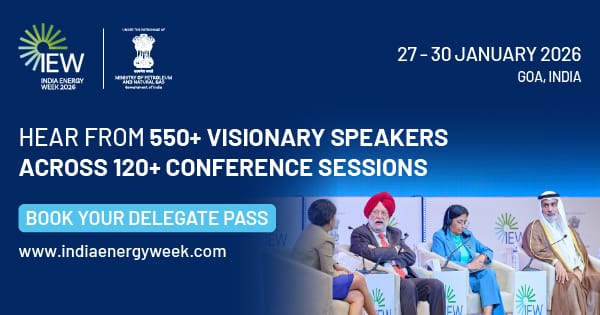
India Energy Week returns for its 4th edition from 27–30 January 2026 in Goa, held under the patronage of the Ministry of Petroleum & Natural Gas and co-organised by FIPI and DMG Events.
As India advances its role in the global energy transition, the event will bring together policymakers, industry leaders and innovators to shape practical pathways toward a secure, sustainable and affordable energy future.
IEW 2026 will spotlight India’s leadership in balancing energy access with decarbonisation, while showcasing strategic investments, emerging technologies and global partnerships driving the next era of energy progress.

Indigo’s Rahul Bhatia, Board Of Directors Under Fire As Flight Cancellations Continue
What?
As flight cancellations continued to disrupt thousands of passengers and rattle India’s aviation regulator, the board of InterGlobe Aviation Ltd. (IndiGo) — and its managing director, Rahul Bhatia — is under mounting scrutiny for silence in the middle of one of the biggest operational crises the airline has faced.
Despite being the MD, Bhatia has not spoken publicly since IndiGo abruptly cancelled more than 1,000 flights in a single day last week. On December 8, over 400 flights were cancelled. The silence has struck a nerve among stakeholders — from stranded passengers to rattled investors — fueling questions around accountability and leadership at India’s largest airline.
Why?
In a sharply worded report, Institutional Investor Advisory Services (IiAS) criticised IndiGo’s leadership, saying the airline’s board has “failed not only in managing the crisis but also in taking responsibility for a problem largely of its own making.”
IiAS noted that the first formal communication released on December 6, days into the chaos, came in the form of a generic statement signed only by an “IndiGo spokesperson” — not by Bhatia, not by the board, and not by any named executive.
The board includes Birender Singh Dhanoa, a retired senior Indian Air Force official, Michael G Whitaker, a former administrator from a US aviation regulatory body, M Damodaran, who was former SEBI chairman, but Pieter Elbers — once the face of IndiGo’s leadership globally — is no longer even on the board, reducing visible accountability further.
With IndiGo now forming a crisis committee after operations began collapsing, IiAS called the move “too late” and said investors and the public deserve direct accountability.
“Someone needs to step up and demonstrate leadership — it will be a shame if it is the regulator and not the board,” the report said.
What's Next?
Civil Aviation Minister Rammohan Naidu said DGCA consulted airlines for a month on duty rule changes and approved variations, indicating IndiGo’s crisis was due to internal mismanagement rather than regulation.
IndiGo now claims operations have stabilised, with over 1,800 flights running, 90% on-time performance, advance cancellations, and Rs 827 crore refunded, saying it is on track for full recovery.
Your competitors are already automating. Here's the data.

Retail and ecommerce teams using AI for customer service are resolving 40-60% more tickets without more staff, cutting cost-per-ticket by 30%+, and handling seasonal spikes 3x faster.
But here's what separates winners from everyone else: they started with the data, not the hype.
Gladly handles the predictable volume, FAQs, routing, returns, order status, while your team focuses on customers who need a human touch. The result? Better experiences. Lower costs. Real competitive advantage. Ready to see what's possible for your business?
33 lakh units
That’s the total number of vehicles India bought in November, a 2% year-on-year rise from 32.31 lakh a year ago, though registrations fell 18% month-on-month as October saw a festive-season peak, according to the Federation of Automobile Dealers Association (FADA).
The Lead: Passenger vehicles recorded a strong 19.7% YoY jump, supported by GST benefits and marriage-season demand, while commercial vehicles grew 19.94% YoY on the back of infrastructure activity and steady freight movement. Two-wheeler sales slipped 3% YoY, with FADA citing a shift in festive purchases to October, delayed crop payments and uneven supply of popular models.
Future: Dealers continue to report strong footfalls driven by GST sentiment and wedding demand. FADA characterises December sentiment as “cautious optimism,” with the next three months expected to remain positive on improving rural demand and a strong rabi start.
JioStar Steps Back
Reliance-controlled JioStar has informed the International Cricket Council (ICC) that it cannot service the remaining two years of its India media-rights deal due to heavy financial losses, prompting the ICC to start a fresh sale process for the 2026–29 cycle, seeking about $2.4 billion, The Economic Times reported. The ICC has approached SPNI, Netflix and Amazon Prime Video, but none have shown serious interest, given pricing concerns.
Setting: JioStar has doubled provisions for losses on onerous sports contracts to Rs 25,760 crore in FY25, even as the ICC posted a $474-million surplus. A collapse in real-money gaming advertising has left a Rs 7,000-crore gap for broadcasters.
Context: With linear TV under pressure and streaming still loss-making, bidders remain cautious. If no replacement emerges, JioStar is contractually bound to continue the deal through 2027.
Oil, Tariffs and Diplomacy
India will continue buying Russian oil for as long as it remains profitable, Kremlin spokesperson Dmitry Peskov said on Monday. His comments follow Russian President Vladimir Putin’s visit to New Delhi last week, where Putin said Russia would ensure uninterrupted fuel supplies to India.
Flashpoint: Earlier this year, the United States imposed a 50% tariff on Indian exports in response to New Delhi’s continued purchases of discounted Russian crude. The two sides have held multiple rounds of talks since the tariff took effect.
Critical Moment: Meanwhile, senior US official Allison Hooker began a visit to India on Sunday, scheduled until Thursday. The US Embassy says she will meet senior officials in New Delhi and industry leaders in Bengaluru to deepen economic ties, boost American exports, and expand cooperation in emerging technologies.
Thali Costs Tank
The cost of both vegetarian and non-vegetarian thalis fell 13% year-on-year to Rs 28.4 and Rs 53.8, respectively, in November as vegetable and pulse prices eased, according to Crisil Intelligence’s Roti Rice Rate (RRR) report.
Origin: Tomato prices declined because of increased arrivals, potato prices fell on a high base, and onion prices dipped sharply due to ample rabi stocks and subdued exports. Pulse prices also softened as imports of Bengal gram, yellow pea and black gram rose significantly last fiscal, boosting domestic availability.
Catch Up Quick: Crisil expects onion prices to firm up over the medium term because of delayed kharif harvesting and lower yields. Potato prices, however, may moderate further as cold-storage stocks hit the market. Pulse prices are projected to remain range-bound, influenced by import duties and any additional policy interventions.
Unrelenting Foreign Portfolio Investor Outflows
On Episode 746 of The Core Report, financial journalist Govindraj Ethiraj talks to Gautami Gavankar , President Banking Solutions at Kotak Mahindra Bank Limited and Sheetal Sapale, Vice President at Pharmarack.
Unrelenting FPI Outflows.
China’s Big Export Push Is Visibly Moving From The Us To Other Countries Including India.
Why Buying Jewellery As An Investment Is Not The Best Of Ideas.
How Worsening Aqi Levels Has Meant Record Sales Of Anti Asthma And Other Respiratory Drugs.
Why Succession Planning Is Important In India’s Family Owned Businesses, For Inheritors And Shareholders.
How Harvard Is Investing Your School Fees In Bitcoin And Losing It.

✍️ Zinal Dedhia, Kudrat Wadhwa, Shubhangi Bhatia | ✂️ Rohini Chatterji | 🎧 Joshua Thomas
🤝 Reach 80k+ CXOs? Partner with us.
✉️ Got questions or feedback? Reach out.
💰 Like The Core? Support us.
