- The Core
- Posts
- What's Your Power Bill Hiding?
What's Your Power Bill Hiding?
In partnership with

Good Morning. India has added massive power capacity over the last decade, but the economics of it are still shaky. Distribution losses, mounting debt and other problems have all continued to pile up inside the system. The result? Consumers are paying not just through higher bills, but through inverters, diesel generators and backup power at home and work.
India’s equity indices ended in losses on Thursday. The BSE Sensex closed at 75,183.36, losing 135.03 points or 0.18%. The NSE Nifty50 closed at 23,654.70, losing 4.30 points or 0.02%.
In other news, India’s composite PMI reduces marginally. Meanwhile, artificial intelligence is changing how companies hire.


India's Power Sector Has Mastered The Art of Passing Costs Down — To The Consumer
There is a particular genius to the way India’s power sector manages risk. It does not eliminate it. Nor does it absorb the risk. It simply moves it systematically, backed by decades of policy and contract.
By the time risk completes its journey through the system, it has passed through half a dozen hands, changed shape several times, and arrived at its final destination: the electricity bill of a household in Nagpur or the unpaid dues of a small factory in Coimbatore.
India's power generation capacity has grown from nearly 250 GW in March 2014 to 515 GW by late 2025. Per capita electricity consumption has risen from 960 units a year in 2013-14 to 1,460 units in 2024-25. Enormous sums have been invested. Yet the question of who pays when things go wrong has never been honestly answered. Follow the money, and the answer is almost always the same person.
How Costs Get Passed Along
The standard tool for passing costs is the ‘pass-through’ clause, buried in long-term supply contracts between power plants and electricity companies. When coal prices rise, generators pass the extra cost to distribution companies. Distribution companies pass it to consumers through higher bills.
These contracts typically run for 20 to 25 years. By March 2018, around 72% of India's power capacity, 620 plants generating 197 GW, was locked into such arrangements, the bulk of it coal-fired. By 2020, the share had risen to roughly 78.5%, or 291 GW, and nearly nine in ten units of power that distribution companies buy today come through such contracts.
After a decade of pause, new long-term coal contracts have revived: Maharashtra, Madhya Pradesh and West Bengal awarded 4.5 GW of new coal projects in 2024-25 at tariffs above Rs 5 a unit, even as recent renewable-plus-storage contracts have cleared at Rs 4.37.
A procurement decision made in 2025 will ride on consumers' bills until 2050. Maharashtra and Tamil Nadu have also contracted over 40% above peak demand. They thus pay twice: once for the power they use, once for the power they over-bought.
The logic is understandable: power plants should not be left exposed to commodity price swings they cannot control. The problem is that this same logic, applied all the way down the chain, means every risk eventually lands on the consumer.
At the same time, electricity companies have been allowed for decades to recover their costs regardless of how efficiently they operate. A distribution company that wastes 15% of the electricity it carries bills consumers for those losses rather than fixing them.
What Discipline Looks Like
Proof exists that things can be done differently. Tata Power turned around Odisha’s electricity companies through better metering, billing, collection, and network maintenance. It shows what can happen when a distributor manages its losses instead of passing them forward.
Before that was the more striking Akanksha Power case in the Khaira sub-division of NESCO, Odisha. In this 45,000-consumer rural area, losses to leakage, theft and unbilled use were cut by 66% between 2010 and 2021, a rare national award-winning bright spot in a distribution-franchising experiment that has mostly disappointed.
But discipline requires accountability. How do we get there?
Crash Expert: “This Looks Like 1929” → 71,105 Diversifying Here
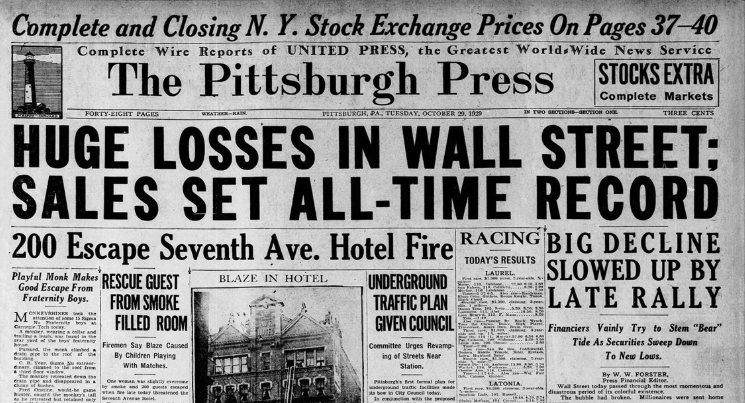
Mark Spitznagel, who made $1B in a single day during the 2015 flash crash, warned markets are mimicking 1929. Seems extreme but we did just see the worst quarter for the S&P since 2022.
So it’s not so surprising that Vanguard and Goldman Sachs forecasted 5% and 3% annual S&P returns respectively for 2024-2034.
Late last year, Apollo’s chief economist Torsten Slok put it this way: "expect zero in return in the S&P 500 over the coming decade."
Almost no one knows this, but postwar and contemporary art appreciated 10.2% annually with near-zero correlation to equities from 1995–2025 overall.*
And sure… billionaires like Bezos can make headlines at auction, but what about the rest of us?
Masterworks makes it possible to invest in legendary artworks by Banksy, Basquiat, Picasso, and more – without spending millions.
29 exits. Net annualized returns like 16.5%, 17.6%, and 17.8% on works held over 1 year+. $1.3 billion invested. 500+ offerings.*
Shares in new offerings can sell quickly but…
*According to Masterworks data. Past performance is not indicative of future returns. Investing involves risk. Important Reg A disclosures: masterworks.com/cd.
58.1
That's India's HSBC Flash Composite PMI for May, marginally down from April's 58.2, as a manufacturing slowdown offset a slight pick-up in services. The reading, while above the 50-mark separating expansion from contraction, signals easing momentum in the private economy.
Overview: Manufacturing bore the brunt, with new orders expanding at one of the slowest rates in nearly four years and the factory PMI slipping to 54.3 from 54.7. The Middle East conflict and travel disruptions dampened export demand, which grew at its weakest pace in 19 months.
Setting: Input costs rose sharply, driven by higher energy, steel, and food prices, while business optimism retreated to a three-month low, signalling persistent headwinds for India's growth momentum.
India Waits for Its Ships
India will not send vessels back to load fuel from the Gulf until the 13 Indian-flagged and one Indian-owned ships stranded west of the Strait of Hormuz return safely, according to a Reuters report. Mukesh Mangal, additional secretary at the Ministry of Ports, Shipping and Waterways, said new vessels will be dispatched "whenever the situation becomes conducive”.
By The Numbers: The cost of India's energy squeeze is showing up in the data. Crude oil import volumes fell 4.3% in April 2026, yet the import bill soared about 50% over the same period last year, according to provisional government data. LNG imports fell nearly 30% in April, even as domestic natural gas production dropped 4.2%, with lower consumption absorbing the gap. Before the conflict, India sourced over 40% of its crude and about 90% of its LPG through the Strait.
Forecast: CII has warned that the pressure won't stay contained to energy. Fuel feeding into fertiliser, and fertiliser into food, means inflation and rural household budgets face mounting stress as the conflict drags on.
JSW Powers Uber's EVs
Ride-hailing firm Uber and JSW Green Mobility, a wholly owned subsidiary of JSW Group, have signed an MoU to jointly develop and deploy electric vehicles tailored for India's ride-hailing market.
The agreement was formalised at JSW's Mumbai headquarters by Parth Jindal and Uber CEO Dara Khosrowshahi, who was on a five-day visit to India. No financial details were disclosed.
The Lead: The partnership will focus on developing localised EV solutions aligned with Indian price and performance expectations, as the shared mobility sector shifts towards cleaner fuels.
The deal builds on the automaker’s broader EV ambitions, as JSW Group and JSW MG Motor, its joint venture with China's SAIC Motor, announced plans to invest up to $440 million to expand the India factory and launch new hybrid and electric models.
Setup: The latest move is also part of Uber's broader push to expand its EV footprint in India, having previously partnered with several fleet providers, including Lithium Urban Technologies, Everest Fleet, Moove, and Tata Motors.
The Gigification Of White-Collar Work
Companies are increasingly turning to contract hiring and outsourcing as they navigate uncertainty around artificial intelligence, TeamLease Services CFO Ramani Dathi told Reuters in an interview. TeamLease is one of India’s largest staffing and recruitment firms.
Origin: The shift comes at a time of layoffs in the corporate world, especially in tech. Over 130 companies like Meta, LinkedIn and Inuit have already laid off over a lakh people globally in 2026, all in part due to AI-driven efficiency pushes, according to industry reports.
Next Steps: But Dathi said some firms that aggressively cut headcount by over 50% while adopting AI later realised they still needed human workers to support operations and manage growth. Instead of relying entirely on permanent hiring, TeamLease now recommends that companies keep around 20% to 30% of their workforce on outsourced or flexible staffing models.
Botox Boom Meets Regulation
At a time when GLP-1 drugs like Ozempic and Mounjaro are dominating headlines, India is also witnessing a boom in injectable beauty and wellness treatments. Across urban India, aesthetic clinics increasingly offer procedures such as Botox, fillers, glutathione injections and IV wellness drips, promising everything from brighter skin to anti-ageing benefits. But a fresh government clarification could complicate things.
By the Numbers: Cosmetic dermatology and aesthetic medicine are among the fastest-growing segments in India’s booming beauty and wellness industry. Analysts value the medical aesthetics market currently at around 650 million-2.3 billion USD, with a CAGR of 12-16%.
Flashpoint: But now, India’s drug regulator has drawn a clear line between cosmetics and medical products. In a public notice issued on May 18, the Central Drugs Standard Control Organisation (CDSCO) said companies cannot market injectable products as cosmetics under Indian law. “Cosmetics are intended to be rubbed, poured, sprinkled or sprayed on the human body,” the regulator said, clarifying that injectable preparations fall under stricter drug and medical regulation instead.
Attio - the AI CRM for modern businesses.

Attio is the AI CRM that keeps you ten steps ahead.
Ask Attio anything. Where should I focus? What deals are at risk? Search, update, and create across your customer data.
Ask more from CRM. Ask Attio.
Markets are Bracing for RBI Moves on Depreciating Rupee
On Episode 880 of The Core Report, financial journalist Govindraj Ethiraj talks to Pratik Gupta, CEO and Co-Head, Institutional Equities at Kotak Securities Ltd.
Why markets are bracing for RBI moves on depreciating rupee
Why oil markets could enter the red zone very soon
Fuel price hikes are necessary but not sufficient
The global palm oil market is in turmoil with Indonesia exerting state control over prices.
Nvidia reports $58 billion net income on $81 billion sales, up over 85% in last quarter.

✍️ Zinal Dedhia, Kudrat Wadhwa, Shubhangi Bhatia, Pritha Pahari | ✂️ Rohini Chatterji | 🎧 Joshua Thomas, Vishnu Rajeev
🤝 Reach 80k+ CXOs? Partner with us.
✉️ Got questions or feedback? Reach out.
💰 Like The Core? Support us.
