- The Core
- Posts
- What IndiGo, IMDb, and labour codes reveal
What IndiGo, IMDb, and labour codes reveal
The Weekend Playlist
In partnership with

Good Morning. This week’s edition cuts across three pressure points in India’s economy and culture.
From IndiGo’s operational crisis exposing deeper cracks in aviation oversight, to IMDb’s data revealing how Indian stardom is fragmenting and going global, and finally to the long-promised labour code reforms that aim to unclog India’s compliance maze but still leave grey areas.
Together, these stories show systems under stress - and the slow, uneven work of reform catching up with scale.
WEEKEND EDITION
IndiGo’s meltdown is a warning flare for Indian aviation
Driving the news: A messy stretch of disruptions at IndiGo - India’s dominant carrier - has reignited a blunt question: when one airline controls the skies, how fragile does the whole system become?
Why it matters: The episode wasn’t just an ops failure - it exposed gaps in oversight, incentives that reward “buffer squeezing,” and a passenger-protection regime that still feels optional.
The big picture
Market concentration amplifies shocks. Dr. Vandana Singh describes IndiGo’s dominance as an “abuse of dominance… arm twisting… regulatory blackmail,” arguing the government’s capacity/slot cut shouldn’t be treated as a temporary slap on the wrist.
The core safety dispute is fatigue - and uneven rules. Capt. Anil Rao lays out how exemptions (especially around night operations/landings) can create a two-track system where pilots in the same country operate under different fatigue constraints - with predictable risk.
Regulatory design is under strain. Sanjay Lazar argues India’s aviation oversight is too concentrated inside the DGCA, which “wears too many hats,” and calls for a stronger passenger charter and tighter monitoring of fleet growth versus pilot availability.
Between the lines
This debate isn’t only about one airline’s rostering. It’s about how India wants aviation to scale: faster growth and tighter schedules, or wider buffers and stricter enforcement - even if it costs more in the short run. Rao argues fatigue should be treated as risk management, not a lever for cost reduction.
A credibility problem
Govindraj Ethiraj points to the trust hit across the ecosystem - from frontline staff facing angry crowds to pilots and passengers left guessing. Dr Vandana Singh argues trust is rebuilt through visible accountability (including leadership showing up publicly) and a DGCA posture that’s more “watchdog” than “embedded.”
What to watch next
Whether “temporary” capacity/slot limits harden into a longer-term competition policy approach.
How quickly exemptions sunset - and whether enforcement becomes uniform across airlines, as pilots’ groups demand.
Whether India moves toward a real passenger charter with clearer compensation, communication standards, and enforceable remedies.
INDIA ENERGY WEEK 2026
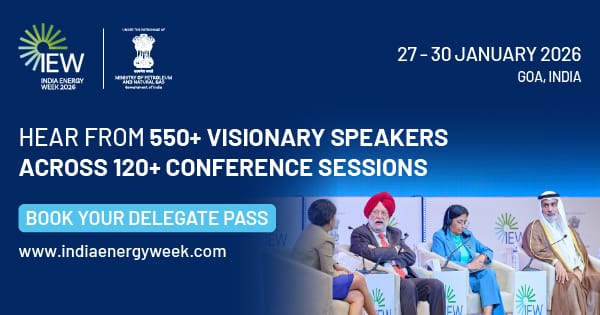
India Energy Week returns for its 4th edition from 27–30 January 2026 in Goa, held under the patronage of the Ministry of Petroleum & Natural Gas and co-organised by FIPI and DMG Events.
As India advances its role in the global energy transition, the event will bring together policymakers, industry leaders and innovators to shape practical pathways toward a secure, sustainable and affordable energy future.
IEW 2026 will spotlight India’s leadership in balancing energy access with decarbonisation, while showcasing strategic investments, emerging technologies and global partnerships driving the next era of energy progress.
THE CORE QUIZ
Which state will receive a $3 billion multi-sector investment from Vietnam’s Vingroup? |
THE MEDIA ROOM
IMDb isn’t just ratings anymore - it’s a mirror of how Indian stardom is changing
Driving the news: IMDb’s India head Yamini Patodia says the platform’s role has quietly expanded from a ratings site to a connective tissue between fans and creators - and its data shows Indian cinema moving away from single, all-dominant superstars.
Why it matters: With India now IMDb’s second-largest market globally, what Indian audiences search, rate and track increasingly shapes how talent is discovered - at home and abroad.
The big picture
From stars to systems. Patodia argues it’s “time to stop looking for the next Shah Rukh Khan.” IMDb’s long-term data shows superstardom fragmenting, with recent years featuring far more first-time and diverse male leads.
Directors are becoming brands. Weekly IMDb rankings now regularly feature filmmakers alongside actors, reflecting audience loyalty to storytelling styles and franchises - not just faces.
Language is now a genre. Viewers increasingly follow themes and worlds across languages, helped by streaming and dubbing, rather than staying loyal to one industry.
How IMDb measures popularity
IMDb rankings are driven primarily by global page views, refreshed weekly - not surveys. Algorithms watch for abnormal patterns, down-weight manipulation, and use weighted averages to keep ratings resilient at scale.
Between the lines
IMDb’s data suggests Indian films no longer have to choose between local authenticity and global reach. Stories rooted in culture but built on universal emotions are increasingly resonating worldwide - a shift reinforced by streaming access.
What to watch
Whether fragmented stardom leads to more democratic casting and discovery.
How IMDb’s India-specific charts continue to influence visibility for emerging talent.
If sustained global interest can move beyond a few breakout Indian hits each year.
MESSAGE FROM OUR SPONSOR
Turn AI Into Your Income Stream

The AI economy is booming, and smart entrepreneurs are already profiting. Subscribe to Mindstream and get instant access to 200+ proven strategies to monetize AI tools like ChatGPT, Midjourney, and more. From content creation to automation services, discover actionable ways to build your AI-powered income. No coding required, just practical strategies that work.
SPECIAL EDITION
India’s new labour codes promise relief - but clarity still lags
Driving the news: Sanjay Mariwala, chairman of OmniActive Health Technologies, calls India’s new labour codes a long-overdue cleanup that collapses 29 laws into four - and sharply reduces compliance chaos for manufacturers.
Why it matters: For mid-sized manufacturers, labour reform isn’t about flexibility alone - it’s about survival in a system drowning firms in paperwork, inspections and legal uncertainty.
The big picture
Compliance overload was the real problem. Mariwala says his company dealt with 8,600 compliances a year in India, compared with fewer than 50 to set up a plant in the US. The new codes meaningfully trim this burden.
Flexibility helps both sides. Allowing longer shifts with proper pay reflects how migrant and skilled workers actually want to work - and removes the risk of firms being labelled “illegal” despite following ground realities.
Social security expands. Bringing parts of the unorganised sector under PF and ESI is, in Mariwala’s view, a clear win for labour and national savings.
The catch
About 10–15% of the rules still lack clarity, especially for research, clinical and night-shift workers who need flexible hours. Mariwala argues the law remains too generic for India’s modern, knowledge-driven jobs.
Between the lines
The deeper shift he wants is cultural: from vivad to vishwas - fewer inspectors, more trust, tougher penalties for genuine violations, and self-regulation backed by accountability. Without that, reform risks becoming cosmetic.
What to watch
Whether states implement the codes uniformly.
If compliance truly drops on the ground - not just on paper.
Whether India can move to a single-window, trust-based regulatory model similar to developed markets.
MESSAGE FROM OUR SPONSOR
AI-native CRM

“When I first opened Attio, I instantly got the feeling this was the next generation of CRM.”
— Margaret Shen, Head of GTM at Modal
Attio is the AI-native CRM for modern teams. With automatic enrichment, call intelligence, AI agents, flexible workflows and more, Attio works for any business and only takes minutes to set up.
Join industry leaders like Granola, Taskrabbit, Flatfile and more.
THE TEAM
✍️ Zinal Dedhia, Kudrat Wadhwa | ✂️ Rohini Chatterji | 📹️ Maitrayee Iyer | 🎧 Joshua Thomas
🤝 Reach 80k+ CXOs? Partner with us.
✉️ Got questions or feedback? Reach out.
💰 Like The Core? Support us.