- The Core
- Posts
- Trump Can't Tax Economic Logic
Trump Can't Tax Economic Logic
In partnership with

Good Morning. If you only read US president Donald Trump’s tariff threats, you’d think the US-India relationship is one tweet away from a collapse. But follow the money, and you'd see a different reality. American tech giants are pouring billions into India, proving the limits of Trump's protectionist policies. Capital is flowing where the talent is, and right now that looks like India.
The US Federal Reserve cut rates by a quarter-percentage point on Wednesday, the third time in 2025. This reduced the rate to the lowest it has been in almost three years — 3.6%. According to reports, chair Jerome Powell indicated at a press conference that the rate may be left unchanged in the coming months.
India’s benchmark indices ended in losses on Wednesday. The BSE Sensex closed at 84,391.27, 275.01 points or 0.32% lower. The NSE Nifty50 ended at 25,758, 81.65 points or 0.32 lower.
In other news, India’s aviation regulator, the Directorate General of Civil Aviation (DGCA), is finally taking action on IndiGo. Meanwhile, India has a rare Goldilocks moment. What can it do to continue momentum?
Trump Raises Tariffs, But American Capital Is Voting With Its Feet
US president Donald Trump is busy erecting walls, but American capital has found a way to climb over them.
In just the past four weeks, US firms have committed more than $67 billion to India, a figure that roughly matches the average annual foreign direct investment inflows into India, even as trade and political relations between the two countries remained in limbo.
The contrast is stark.
On one hand, the Trump administration is doubling down on protectionism. As of August 26, the US imposed a 50% tariff on Indian imports.
And just this week, Trump threatened new levies on rice, a symbolic, though economically minor jab at New Delhi. Only 5% of India’s rice exports go to the US.
A bilateral trade deal, which could have halved those tariffs to 25% by mid-December, remains nowhere in sight.
Yet, on the other hand, the captains of American industry are aggressively stepping up their bets on the subcontinent.
Limits Of Managed Trade
Leading the charge are the “hyperscalers” Amazon, Microsoft, and Google, pouring billions into data centres and cloud infrastructure in India.
Amazon alone announced a $35 billion outlay on Wednesday, aiming to supercharge its Indian exports to $80 billion and support 3.8 million jobs by 2030.
Microsoft announced a $17.5 billion investment just a day before that.
This offers a lesson in the limits of managed trade.
While tariffs can punish labour-intensive exporters of textiles, seafood, and jewellery, sectors where Indian firms are indeed hurting, they do little to stem the flow of digital capital.
A review of overseas data-centre investments from the US shows that India has become a premier destination for American tech investment, ahead of Japan and the UK, while leaving most Asian rivals far behind.
It isn’t just Big Tech.
The proliferation of Global Capability Centres (GCCs) tells a broader story of labour arbitrage moving up the value chain.
Perhaps the most ironic illustration arrived two months ago when McDonald’s, a brand Trump holds in high culinary regard, opened a 1,500-seat technology hub in Hyderabad.
With plans to expand further.
Talent Trumps Tariffs
The White House wants manufacturing jobs to return to the Rust Belt, and to some extent, tariffs encourage that reshoring.
But the modern economy is about data, services, and intellectual property.
To serve both the vast Indian domestic market and the global economy, US companies are building distinct ecosystems abroad that tariffs cannot easily dismantle, as is quite evident from all this activity.
Trump may tax rice and shirts, but he cannot tax the economic logic that drives American business to where growth and talent reside.

Banish bad ads for good

Your site, your ad choices.
Don’t let intrusive ads ruin the experience for the audience you've worked hard to build.
With Google AdSense, you can ensure only the ads you want appear on your site, making it the strongest and most compelling option.
Don’t just take our word for it. DIY Eule, one of Germany’s largest sewing content creators says, “With Google AdSense, I can customize the placement, amount, and layout of ads on my site.”
Google AdSense gives you full control to customize exactly where you want ads—and where you don't. Use the powerful controls to designate ad-free zones, ensuring a positive user experience.
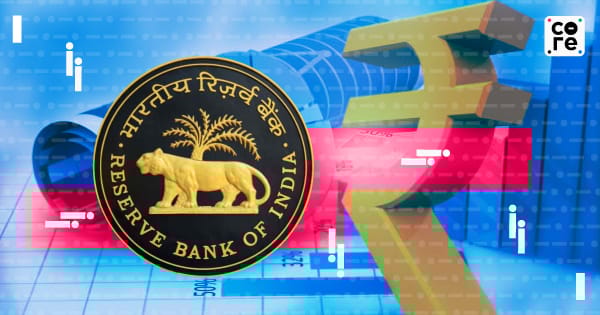
Momentum Matters, But India’s Long Path To $5 Trillion Needs Discipline Now
What?
India is in the middle of a rare Goldilocks moment. With inflation at a “benign 2.2%” and growth at 8% in the first half of FY26, the Reserve Bank of India’s latest monetary policy has leaned decisively toward supporting growth. A 25-basis-point rate cut has brought the repo rate to 5.25%, backed by liquidity injections through OMO purchases of up to Rs 1 lakh crore and a $5 billion buy-sell swap. This follows the June rate cut and a one percentage point CRR reduction, keeping money cheap and abundant.
The economy’s momentum is visible. GDP projections have been revised upward to 7.3% for FY26 after a strong 8.2% print in Q2, building on five years of steady 6-8% growth. Regulators and policymakers, too, have been clearing structural friction with new labour codes, simplified financial regulations and capital market reforms.
Why?
The current spike in demand is powered by tax rebates, GST rationalisation and easier credit conditions, amplified by the festive season and a young, aspirational population. But beneath the buoyancy lie vulnerabilities. Manufacturing capacity utilisation slipped to 73.2% in Q2, and exports remain soft amid geopolitical tensions and tariff battles. Merchandise exports contracted sharply in October, and services exports have also weakened.
Even as liquidity gushes in, the risk of “adverse selection” looms. Cheaper credit could tempt lenders toward riskier borrowers, potentially sowing the seeds of future stress. The forthcoming ECL framework may help, but the risk cannot be wished away. External demand, too, will stay subdued unless pending trade agreements crystallise.
What Next?
The big question is whether this pace of growth can be sustained. India may finally have money, momentum and a more navigable regulatory landscape. Capital is flowing, the RBI is watchful, and structural reforms are inching forward. But reaching a $5 trillion economy by the end of the decade requires building capacity to absorb resources productively.
Can India hold its nerve and use this momentum to propel ahead?
IndiGo Turmoil Deepens
IndiGo’s crisis continued on Wednesday, with nearly 100 more flights cancelled, prompting India’s aviation regulator, the DGCA, to summon CEO Pieter Elbers on December 11. The regulator has asked IndiGo’s top leadership to present detailed data on disruptions, flight restoration, refunds, rerouting and crew recruitment.
Fast Facts: The DGCA has also decided to deploy an eight-member team to monitor operations as passengers continue to face long queues, last-minute schedule changes and widespread cancellations across major airports. The Delhi High Court pulled up the Centre, questioning how rival airlines were allowed to charge fares as high as Rs 35,000–39,000 amid IndiGo’s meltdown.
Why It Matters: IndiGo, which accounts for over 60% of domestic traffic, has cancelled thousands of flights since early December, citing a “compounding effect” of weather, congestion, technical issues and stricter FDTL norms.
India, US Push Trade Truce
India’s Commerce Secretary Rajesh Agrawal met US Deputy Trade Representative Rick Switzer in New Delhi on Wednesday to review trade ties and ongoing talks on a potential Bilateral Trade Agreement, the commerce ministry said. Switzer is leading a US delegation for two days of discussions as India seeks relief from higher US tariffs imposed over its Russian oil purchases.
Context: The US doubled tariffs on several Indian goods in August — up to 50% — hurting exports of textiles, chemicals and shrimp. India’s exports to the US fell nearly 9% in October to $6.31 billion, though higher than September’s $5.47 billion.
Setting: Washington is also pushing India to ease market access for US goods, particularly agricultural products, even as India has resisted higher imports but remained “forward leaning,” USTR officials said.
Flying Without Clearance?
Air India’s internal probe into an Airbus A320 operating eight commercial flights without a valid Airworthiness Review Certificate (ARC) has exposed “systemic failures” across engineering, operations, and communication, Reuters reported.
Flashpoint: The aircraft flew passengers on November 24 and 25, even though its ARC had expired, after engineers failed to notice the lapse and cleared it, despite recent engine replacements, for a test flight without the required permit. Pilots also missed mandatory document checks.
What's Next: The report said critical information was not shared, process discipline broke down, and several opportunities to intervene were overlooked. The findings follow earlier regulatory warnings to Air India. The airline has suspended some staff, introduced corrective steps, and pledged stronger compliance amid rising scrutiny of India’s aviation sector.
More Visa Chaos
US consulates are cancelling and rescheduling many H1B and H4 visa interviews scheduled in India for mid and late December to March 2026 and later.
How We Got Here: Consulates say they need time to implement the US State Department’s new rule asking applicants to make their social media profiles public.
Critical Moment: These cancellations have disrupted travel plans and work timelines for Indian professionals who expected to return to the US before year end. This shift comes soon after a US proposal to charge employers a $100,000 fee for new H1B petitions filed from abroad.
Know what works before you spend.

Discover what drives conversions for your competitors with Gethookd. Access 38M+ proven Facebook ads and use AI to create high-performing campaigns in minutes — not days.
✍️ Zinal Dedhia, Kudrat Wadhwa, Shubhangi Bhatia | ✂️ Rohini Chatterji | 🎧 Joshua Thomas
🤝 Reach 80k+ CXOs? Partner with us.
✉️ Got questions or feedback? Reach out.
💰 Like The Core? Support us.
