- The Core
- Posts
- Trump Blinks At Davos
Trump Blinks At Davos
In partnership with

Good Morning. High drama played out this week at Davos, with world leaders gathered there and Greenland making the most headlines. US President Donald Trump did a sudden pivot from threatening to take over Greenland, providing brief relief for global markets and currencies. However, this by no means ends the global instability caused by his actions.
India’s equity indices snapped their three-day losing streak on Thursday. The BSE Sensex closed at 82,307.37, gaining 397.74 points or 0.49%. The NSE Nifty50 closed at 25,289.9, gaining 132.4 points or 0.53%
In other news, India’s national carrier Air India faces massive losses. Meanwhile, America has left the World Health Organization.

Trump’s Greenland Bully Act Collapses Under Davos Spotlights
The World Economic Forum regained its focal interest this year, as it served as the forum for the unveiling of major geopolitical moves that moved markets and currencies, and removed the blinkers of leaders who have trained since early youth to see the emperor’s clothes, even when he had none on.
American president Donald Trump backed down on two threats that had roiled markets around the world: to take Greenland using force if necessary, and to levy new tariffs on European countries that resisted his move to take over Greenland. In the course of a rambling speech at Davos, the US president disavowed both threats and claimed to have struck a framework deal on Greenland, whose contents remain a mystery to those who are not Donald Trump.
By chickening out on taking over Greenland by force and on levying punitive tariffs on those who oppose American takeover of Greenland, Trump underlined — involuntarily, of course — the validity of Canadian prime minister Mark Carney’s message to middle powers, delivered to much acclaim at Davos.
Non-Alignment The Way To Go?
Middle powers, such as Canada, said Carney, must stop pretending that the old world order continues to operate, accept the reality of rupture and prepare to defend their sovereignty and welfare in the face of big powers seeking to use their size to gain unfair advantage at the expense of other nations. “Value-based realism” is the term Carney used to describe his new strategy.
Carney did not say this in so many words, but the strategy he outlined is essentially the idea of non-alignment or multi-alignment that has been the cornerstone of India’s foreign policy since Independence.
Canada was also not prepared to abandon globalisation, and sought to act as a bridge between the Trans-Pacific Partnership and the European Union. This adds momentum to the opinion that India should join the Comprehensive and Progressive Agreement for Trans-Pacific Partnership, the name for the Trans-Pacific economic partnership deal that the Obama administration had originally championed.
Is Trump Okay?
Prior to travelling to Davos, President Trump sent a text message to the prime minister of Norway, saying that since the Norwegians refused to give Trump the Nobel Prize for Peace, Trump no longer feels obliged to act in a peaceful fashion, and that the US could well use force to take over the Danish protectorate of Greenland. (Unlike other Nobel prizes, which are decided in Sweden, the Peace prize is decided by a committee appointed by Norway’s Parliament, and the prize is awarded in Norway).
Some commentators have read into this message not just Trump’s peevish pettiness but also an alarming infirmity of mind that could progressively cripple his presidency. Trump’s mental and physical well-being is worth keeping an eye on.

Simplifying GST for Large Enterprises
Masters India is one of the biggest GST Suvidha Providers (GSP) under Goods and Services Tax Network (GSTN). Through our advanced solutions our mission is to assist businesses simplify their required compliance and workloads. We create smart compliance automation tools to help businesses simplify their compliance activities and run their operations more effectively. Join us as we continue to innovate and deliver actionable insights, strategic tools, and exceptional support to help enterprises stay ahead in the ever-evolving financial landscape.
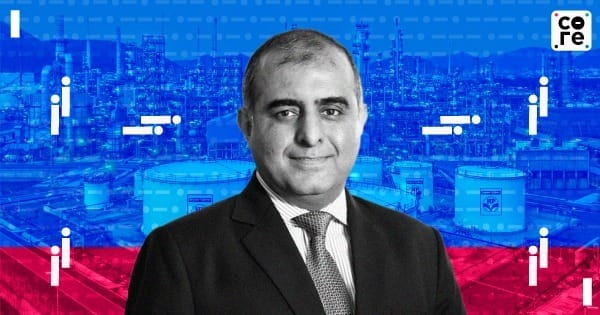
HPCL’s Kaushal: Cost Discipline Key As Energy Risks Multiply
India is coming into 2026 after a tumultuous 2025 with trade deals on haywire and paying punitive tariffs for buying Russian crude. India is still heavily dependent on other countries for its crude, with almost 85% being imported. Also, the economy is still dependent on traditional sources of energy such as petroleum and thermal power.
According to the chairman and managing director of Hindustan Petroleum Corporation Limited (HPCL), Vikas Kaushal, India’s energy sector must sharpen cost structures to survive at a time of geopolitical turmoil. At the same time, he said, India is working on bringing in change to reduce this dependence.
“As a nation, we have been actively diversifying our energy mix. Of course, we are very dependent on imported crude. But if you look at energy sources, a lot of it is actually starting to shift. A lot of incremental addition is around renewable sources. That does not need any imports. Domestic coal production has ramped up in the last few years,” Kaushal told The Core in an interview as part of the Indian Energy Week.
Changing Trade
India’s public sector refiners are also changing the way they trade with oil.
“Now, we even go in time and say, oh, the market is right, let me do two cargoes right now. There are times when we actually have an offer on our desk, and we do not buy it and say, no, do not hold on. This cargo was cheaper last week; maybe it will go down next week.
So, there is a lot more dynamism. So, I would say some efficiencies have been brought in. There is a next step on trading, which is called asset-backed trading, where you start taking positions,” Kaushal said.
Kaushal said that despite post-Covid and geopolitical issues, there is more vibrancy in the sector than there was 20 years ago.
Go from AI overwhelmed to AI savvy professional

AI will eliminate 300 million jobs in the next 5 years.
Yours doesn't have to be one of them.
Here's how to future-proof your career:
Join the Superhuman AI newsletter - read by 1M+ professionals
Learn AI skills in 3 mins a day
Become the AI expert on your team
Rs 15,000 crore
That’s the loss Air India Ltd. is set to report for the year ending March 31, after a fatal aircraft crash and regional airspace shutdowns stalled its turnaround, according to Bloomberg.
Fast Facts: The Tata Group–Singapore Airlines joint venture had been edging toward operational break-even before a June Dreamliner crash killed more than 240 people. Pakistan’s closure of its airspace to Indian airlines forced longer, costlier routes to Europe and the US. The board rejected a five-year plan projecting profits only in year three.
By The Numbers: Air India has lost Rs 32,210 crore over the past three years, based on government filings compiled by Tofler. The airline sought at least Rs 10,000 crore in fresh support last year.
Pivot: The losses are sharpening pressure on owners Tata Group and Singapore Airlines, complicating leadership decisions and intensifying demands for a faster restructuring.
Aviation Losses Widen
The Indian aviation sector enters FY2026 under sustained financial and operational strain, with losses widening and demand growth slowing. According to credit rating agency, ICRA expects net industry losses of Rs 170–180 billion in FY2026, up sharply from Rs 56 billion in FY2025, driven by disruptions, higher costs and forex losses.
Flashpoint: Domestic passenger traffic growth has weakened, rising just 1.3% year-on-year in April–December 2025. Full-year FY2026 growth is now seen at 0–3%, revised down from 4–6%. International traffic remains more resilient, with 9% growth so far, though forecasts have also been cut.
What's Next? Capacity constraints persist amid flight cancellations and aircraft groundings, pushing load factors to elevated levels. Cost pressures remain high due to fuel, dollar-linked expenses and a weaker rupee. ICRA sees FY2026 as a transition year, with recovery expected in FY2027.
Adani Under US Scrutiny
The US Securities and Exchange Commission has asked a New York court for permission to serve summons on Indian billionaire Gautam Adani and Adani Group executive Sagar Adani by email, after India rejected two earlier requests, Reuters reported. The SEC said it does not expect service through existing channels to succeed.
Backstory: The case, the most prominent US legal action involving an Indian conglomerate, stems from an indictment unsealed in November 2024 alleging a $265 million bribery scheme linked to power purchases from Adani Green Energy and claims that investors were misled about anti-corruption practices. The Adani Group has denied the allegations.
Context: India’s refusals cited procedural grounds and questioned the SEC’s authority, prompting the regulator to argue further attempts under the Hague Convention would be futile.
WHO Without US
The United States is set to formally exit the World Health Organization, completing a year-long withdrawal process triggered by President Donald Trump soon after his return to office.
The Lead: Under US law, leaving the WHO requires a 12-month notice period and settlement of outstanding dues. That process is now ending, bringing decades of American membership in the UN’s top global health body to a close. The US has been the WHO’s largest single funder, contributing both mandatory fees and voluntary grants.
Why It Matters: Health experts warn the move could weaken global coordination on disease surveillance, pandemic response and vaccine access. For countries like India, which depend on WHO guidelines and emergency coordination, the exit raises concerns about funding gaps and slower responses during future health crises.
The Pollution Penalty
At the World Economic Forum in Davos, Harvard professor and former IMF chief economist Gita Gopinath warned that pollution now threatens India’s economic prospects more than global trade tariffs.
Flashpoint: She said the country’s environmental degradation, especially severe air pollution, exacts a heavy toll by diminishing worker productivity, driving up healthcare costs and eroding confidence among global investors. Gopinath cited WHO data showing roughly 1.7 million deaths in India each year linked to pollution, with knock-on effects that reduce economic output and strain public finances.
Outcome: Tackling pollution, she said, should be a “top national priority” for India.
The Head Spinning Greenland U-Turn Lifts Markets
On Episode 780 of The Core Report, financial journalist Govindraj Ethiraj talks to Vijai Mantri, Founder & Chief Investment Strategist at JRL Money as well as Anindya Banerjee, Head – Currency & Commodity Research, Kotak Securities.
The Head spinning Greenland U-Turn lifts markets
Foreign capital is moving to safety, why is that?
Are we nearing peak oil and what that means for India
What's happening in the silver markets?

✍️ Zinal Dedhia, Kudrat Wadhwa, Shubhangi Bhatia | ✂️ Rohini Chatterji | 🎧 Joshua Thomas
🤝 Reach 80k+ CXOs? Partner with us.
✉️ Got questions or feedback? Reach out.
💰 Like The Core? Support us.