- The Core
- Posts
- The Quiet Reordering of India’s Economy
The Quiet Reordering of India’s Economy
The Weekend Playlist
In partnership with

India’s economy is changing—but not in the ways the headlines suggest. While Budgets promise momentum and EVs dominate the narrative, the real shifts are happening elsewhere: in refineries betting on hydrogen without abandoning oil, in cities quietly switching to CNG, and in an economy where weak demand and stalled investment are constraining what policy can actually deliver. This edition looks past the hype to examine how India’s energy transition and macro reality are unfolding in real time—and why the future may be more pragmatic than revolutionary.
WEEKEND EDITION (Energy Special)
BPCL Is Betting on Hydrogen—but It’s Not Giving Up on Oil Yet
Govindraj Ethiraj in conversation with Sanjay Khanna of BPCL
India’s energy transition is often framed as a clean break from fossil fuels. BPCL doesn’t see it that way.
In a special India Energy Week 2026 episode of The Core Report, financial journalist Govindraj Ethiraj speaks with Sanjay Khanna, Director (Refineries) and Additional Charge of Chairman & Managing Director at BPCL, about how one of India’s largest energy companies is planning for a future that demands growth, energy security, and decarbonisation—simultaneously.
The core insight: this is not a story of disruption, but of coexistence.
Oil Isn’t Going Anywhere—Yet
Khanna is clear-eyed. India’s energy demand is still rising, and oil and gas will remain central for decades. BPCL’s strategy is not about abandoning fossil fuels, but about running them cleaner and more efficiently, while building the next energy stack in parallel.
This dual approach sits at the heart of Project Aspire, BPCL’s long-term roadmap to balance profitability, resilience, and climate goals at scale.
Hydrogen, Without the Hype
Hydrogen features prominently—but with restraint. Falling electrolyser costs and pilot projects are slowly moving green hydrogen from promise to practice, especially within refineries and heavy transport.
BPCL is already experimenting with electrolyser-based hydrogen production and mobility use cases, embedding hydrogen into existing operations rather than treating it as a distant replacement.
Bottom line
India’s energy shift will be slower, more pragmatic, and structurally different from the West. BPCL’s approach reflects that reality—building the future without breaking the present.
INDIA ENERGY WEEK 2026
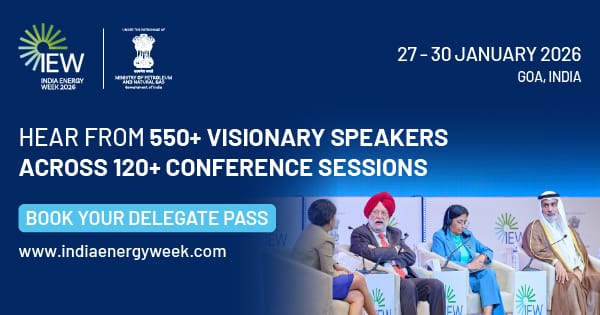
India Energy Week returns for its 4th edition from 27–30 January 2026 in Goa, held under the patronage of the Ministry of Petroleum & Natural Gas and co-organised by FIPI and DMG Events.
As India advances its role in the global energy transition, the event will bring together policymakers, industry leaders and innovators to shape practical pathways toward a secure, sustainable and affordable energy future.
IEW 2026 will spotlight India’s leadership in balancing energy access with decarbonisation, while showcasing strategic investments, emerging technologies and global partnerships driving the next era of energy progress.
SPECIAL EDITION (Energy Special)
Is CNG Quietly Winning India’s Fuel War?
Govindraj Ethiraj in conversation with Kamal Kishore Chatiwal of Indraprastha Gas Limited
CNG’s rise in India’s cities is no longer a forecast. It’s already reshaping how people drive, commute, and power their homes.
In an India Energy Week 2026 special episode of The Core Report, financial journalist Govindraj Ethiraj speaks with KK Chatiwal of Indraprastha Gas Limited on why compressed natural gas is outpacing petrol and diesel—even as electric vehicles dominate headlines.
The reasons are practical, not ideological. Lower running costs, cleaner emissions, reliable performance, shorter refuelling times, and a rapidly expanding station network have made CNG the fuel of choice for a growing segment of urban India’s middle class.
But the story goes beyond cars. The conversation also traces the rise of India’s gas-based economy—from piped natural gas in homes and villages to compressed biogas, domestic production, imported LNG, and the quiet expansion of city gas distribution networks.
The takeaway is simple: India’s energy transition is being shaped less by hype and more by affordability, infrastructure, and scale. And for now, CNG fits that reality better than most alternatives.
The bottom line:
This episode offers a ground-level view of how India’s energy shift is unfolding in real time—one fuel switch at a time.
THE CORE QUIZ
Who will succeed Deepinder Goyal as the CEO of Eternal Limited? |
MESSAGE FROM OUR SPONSOR
Become An AI Expert In Just 5 Minutes

If you’re a decision maker at your company, you need to be on the bleeding edge of, well, everything. But before you go signing up for seminars, conferences, lunch ‘n learns, and all that jazz, just know there’s a far better (and simpler) way: Subscribing to The Deep View.
This daily newsletter condenses everything you need to know about the latest and greatest AI developments into a 5-minute read. Squeeze it into your morning coffee break and before you know it, you’ll be an expert too.
Subscribe right here. It’s totally free, wildly informative, and trusted by 600,000+ readers at Google, Meta, Microsoft, and beyond.
HOW INDIA’S ECONOMY WORKS
Why India’s Budget Can’t Fix What’s Broken
Puja Mehra in conversation with economist Dr. Jahangir Aziz
Every Union Budget arrives with outsized expectations. This one shouldn’t.
In the latest episode of How India’s Economy Works, journalist and author Puja Mehra speaks with Dr. Jahangir Aziz, Head of Emerging Market Economics at JPMorgan and a former finance ministry official, on what India’s upcoming Budget can—and more importantly, cannot—realistically deliver.
The diagnosis is uncomfortable: India’s growth problem is no longer cyclical. It is structural.
What the Budget Can—and Can’t—Do
With nominal growth slowing and tax revenues under pressure, the government’s commitment to fiscal consolidation sharply narrows its room for manoeuvre. Budgetary action can stabilise, but it cannot engineer a private investment revival on its own.
Aziz also flags risks from an increasingly intrusive regulatory stance in capital markets—well-intentioned, but potentially dampening risk-taking and capital formation.
The Bigger Risk
The real danger, Aziz argues, lies in clinging to “Goldilocks” narratives—strong growth, low inflation, stable macros—while ignoring the deeper signals of weak demand and structural inertia.
Fiscal prudence matters. But without addressing market concentration, financing constraints, and demand weakness, it may only preserve stability—not unlock growth.
Bottom line
This episode of How India’s Economy Works is a sobering reminder that Budget day headlines rarely reveal the economy’s real constraints.I
THE TEAM
✍️ Zinal Dedhia, Kudrat Wadhwa | ✂️ Rohini Chatterji | 📹️ Maitrayee Iyer | 🎧 Joshua Thomas
🤝 Reach 80k+ CXOs? Partner with us.
✉️ Got questions or feedback? Reach out.
💰 Like The Core? Support us.