- The Core
- Posts
- Putin, Pressure & Posture
Putin, Pressure & Posture
In partnership with

Good Morning. Russian President Vladimir Putin’s India visit is more than just a bilateral meeting. New Delhi is sending clear signals that it won’t be strong-armed by Washington and its punitive tariffs. With defence deals, tech transfer, and geopolitical leverage all on the agenda, this trip is India reminding the world that it won’t be managed.
India’s equity benchmarks broke a four-session losing spree on Thursday. The BSE Sensex closed at 85,265.32, gaining 158.5 points or 0.19%. The NSE Nifty50 closed at 26,033, 47.75 points or 0.18% higher.
In other news, IndiGo’s operational troubles mount. Meanwhile, India’s central bank, the Reserve Bank of India (RBI), could go for a rate cut.

Putin’s Visit Is An Opportunity For India To Reassert Strategic Autonomy
Putin arrived in New Delhi on Thursday amidst American pressure on India to stop buying oil and weapons from Russia, and source such things from the US. The US has slapped a special, punitive tariff of 25% on imports from India, on top of a base layer of 25%, to pressure India to stop buying Russian oil. Such purchases, in the opinion of the US president, finance Russia’s war in Ukraine. This is one of the highest import levies on any major exporter to the US.
President Putin’s visit serves three purposes. By defying American and European expectations that India would resile from its stance of refusing to condemn Russia for the Ukraine war, and ignoring explicit pressure from the US to cut back relations with the US, New Delhi makes it clear that its strategic autonomy is not up for negotiation.
While India values its ties with the US, it would not allow Washington to dictate India’s policy choices. Attempts to bully India would be ignored.
Long Defence Partnership
India and Russia have an ongoing defence partnership, which allows India to import high-end weapons from Russia, often accompanied by technology transfer. The S400 anti-missile system is one of the world’s most advanced and came in handy during the Operation Sindoor encounter with Pakistan. The Brahmos missiles, which proved their efficacy in the same operation, is produced in India in a joint venture with Russia.
Russia is likely to offer yet more advanced weapons systems, such as the Su-57E fifth-generation stealth fighter aircraft, including its production in India, accompanied by complete technology transfer.
Given the US's proven tendency to use its leverage to dictate policy to New Delhi and its reluctance to transfer technology, India would be inclined to opt for the Russian offer. However, India also needs to balance its relations with Russia with sound relations with the US.
Maintaining close ties with Russia, including by entering into a Reciprocal Exchange of Logistics Support, which provides for the availability of airspace and ports for either nation’s craft in the other country’s facilities, India keeps alive Russia’s salience as a global power.
India cannot afford to have a bipolar hegemony of the world by the US and China, as that would leave India with very little bargaining power vis-à-vis the US, whose support it would need in the face of China’s military strength and hostile posture towards India. India has greater room for manoeuvre in a multipolar world, as compared to a bipolar one.
Simplifying GST for Large Enterprises
Masters India is one of the biggest GST Suvidha Providers (GSP) under Goods and Services Tax Network (GSTN). Through our advanced solutions our mission is to assist businesses simplify their required compliance and workloads. We create smart compliance automation tools to help businesses simplify their compliance activities and run their operations more effectively. Join us as we continue to innovate and deliver actionable insights, strategic tools, and exceptional support to help enterprises stay ahead in the ever-evolving financial landscape.
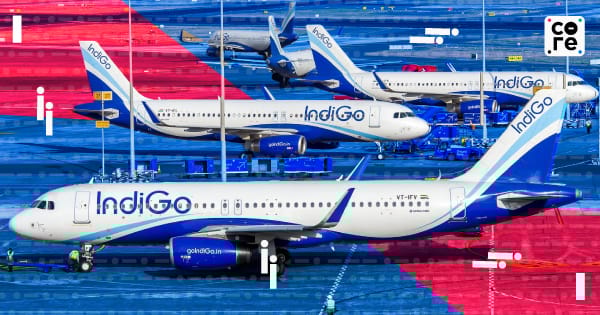
Inside IndiGo’s Turbulence: What Went Wrong And Why Flights Were Cancelled
What?
Over the past three days, more than 300 IndiGo flights have been cancelled across India, triggering chaos at major airports across the country and leaving thousands of passengers stranded. For many travellers, cancellations came after hours of waiting, with repeated delays before final notifications that their flights would not take off at all.
Videos circulating online show distressed passengers demanding answers as long queues formed at airline counters.
In a statement released on December 3, IndiGo attributed the operational collapse to a series of overlapping challenges.
As per reports, the Directorate General of Civil Aviation (DGCA) has directed IndiGo to submit the causes of the ongoing disruption and outline its proposed mitigation measures.
Why?
The crisis has forced the country’s largest airline, operating over 2,200 flights daily, to issue multiple public statements. However, insiders suggest the turmoil was neither sudden nor unexpected, raising questions around IndiGo’s staffing shortages, aggressive scheduling, regulatory compliance and internal unrest.
While chaos plays out publicly at airports, dissatisfaction has been brewing among IndiGo’s workforce for a while.
“Internally, there’s now a silent rebellion. Nobody is officially calling it a strike because they don’t want it to escalate into something formal,” an IndiGo pilot told The Core on condition of anonymity.
The breaking point, according to the source, coincided with an Emirates Airlines recruitment drive held in Mumbai (December 1), Bengaluru (December 3) and Delhi (December 5).
“Many cabin crew didn’t report to duty because they were attending those interviews. That set off a chain reaction, the system collapsed, and even ground staff in Mumbai staged a flash strike on December 3,” he added.
IndiGo CEO Pieter Elbers on Thursday said the airline’s immediate focus is restoring normal operations and improving punctuality, a goal he acknowledged won’t be easy.
Is this the only reason for flight cancellations across the country? Read the full story below to know.
Get Real Estate Training from Wharton Experts

Gain the skills top firms demand with the Wharton Online + Wall Street Prep Real Estate Investing & Analysis Certificate.
In 8 weeks, learn from leaders at Blackstone, KKR, Ares, and more while analyzing real deals.
Save $300 with code SAVE300 + $200 with early enrollment by January 12.
$47.2 billion
That’s how much PwC India projects the country’s entertainment and media (E&M) industry will grow by 2029, estimating the sector will expand from USD 32.2 billion in 2024 at a 7.8% CAGR—nearly double the global average of 4.2%.
The Lead: The momentum is being driven by rising digital participation, a young consumer base, expanding broadband access, and deeper online content consumption, all of which are reshaping audience behaviour and boosting opportunities for platforms, advertisers, and creators.
The Shift: Economic growth, higher discretionary spending, and rapid adoption of digital services are further accelerating the industry’s move toward personalised, immersive, and regional content. “India’s E&M sector continues to outpace global growth,” said Rajesh Sethi, Partner and Leader – Media, Entertainment and Sports, PwC India.
Rate Cut Buzz
India’s favourable growth-inflation backdrop, the rupee breaching Rs 90 against the dollar, and heightened geopolitical uncertainty have strengthened expectations of a 25-basis-point rate cut when the Reserve Bank of India announces its policy decision on December 5.
Setting: The RBI’s Monetary Policy Committee (MPC) began its three-day meeting on December 3 to assess whether the current environment warrants the start of an easing cycle or a continued pause.
Context: In November, Governor Sanjay Malhotra said India’s latest macro data supported the case for a rate cut, a remark that pulled bond yields lower. The RBI has already reduced the repo rate by 100 basis points across three tranches since February, helped by a sustained decline in CPI inflation.
Fact-Checkers Beware
The Trump administration in the US has ordered enhanced vetting for H‑1B visa applicants. Under an internal memo sent on Tuesday, US consular officers must now check applicants and their family members travelling with them for any history of content moderation, misinformation, fact-checking or perceived “censorship” of speech online, including reviewing resumes and LinkedIn profiles.
The Backstory: This comes on top of a sharp increase in visa costs: earlier this year, the administration imposed a $100,000 fee for new H-1B applications.
What This Means Going Forward: The pair of moves, significantly tougher vetting plus the steep fee, reflects a broader crackdown on skilled foreign-worker immigration under Trump. Observers warn it may deter companies from hiring international candidates and reduce opportunities for global talent seeking US jobs.
Let The GLP-1 Games Begin
Novo Nordisk will launch Ozempic in India within the next two to three weeks, Reuters reports. The Danish pharma company wants to move before Indian drugmakers release their own semaglutide-based GLP-1 drugs, which are already in development.
Set Up: India is a huge market: it has the world’s second-highest number of diabetics after China and rapidly rising obesity rates. Eli Lilly's Mounjaro leads the race right now, selling 262,000 doses of Mounjaro in October, compared to 26,000 doses of Novo's Wegovy, both of which are also weight loss drugs helpful for diabetics too.
Pivot: Price remains a hurdle, though. GLP-1 injections such as Wegovy or Mounjaro can cost around Rs 15,000 per month. But competition is coming fast. Indian drugmakers like Sun Pharma, Cipla, Dr Reddy’s and Lupin are racing to make generics that could be far cheaper once approved.
How India Googled In 2025
Google’s ‘Year in Search’ 2025 list is out, and it places ‘Indian Premier League’ at the top of India’s search trends. Gemini followed close behind as users hunted for AI features, tutorials and updates. The Maha Kumbh Mela dominated news searches, and its itinerary became the year’s most-clicked travel query.
Fast Facts: Searches jumped for rising names like Vaibhav Suryavanshi and Jemimah Rodrigues. Entertainment queries pushed Saiyaara and the viral character Labubu into the spotlight. Real-time lookups such as “earthquake near me” and “air quality near me” spiked during high-stress moments.
Catch Up Quick: Across 2025, Indians toggled between cricket, AI tools, major festivals, film buzz and emergency updates, giving a clear snapshot of what captured national attention.
Markets Snap A Four-Day Losing Streak
On Episode 743 of The Core Report, financial journalist Govindraj Ethiraj talks to Capt. Amit Singh, a pilot and an aviation safety strategist.
Will The Reserve Bank Cut Interest Rates Today? The Factors At Work.
Markets Snap A Four-Day Losing Streak.
What Is The Central Bank’s View On The Rupee?
Indigo Says Normalcy Only By February 10, 2026.
Apple Is Shipping Record Number Of Iphones Thanks To Iphone 17

✍️ Zinal Dedhia, Kudrat Wadhwa, Shubhangi Bhatia | ✂️ Rohini Chatterji | 🎧 Joshua Thomas
🤝 Reach 80k+ CXOs? Partner with us.
✉️ Got questions or feedback? Reach out.
💰 Like The Core? Support us.
