- The Core
- Posts
- Living Wills, Explained
Living Wills, Explained

Kudrat Wadhwa
May 09, 2026 • Estimated Reading Time: 2 minutes

In partnership with

Dear Reader,
Last month, Sarita, a 62-year-old retired corporate professional, gave herself an unusual birthday gift.
She got a living will made.
A living will is a legal document that states what medical treatment you want, or don’t want, if you become unable to communicate your wishes yourself.
In hers, Sarita has specified that if her doctors determine that there is no realistic scope of recovery, she does not want life-prolonging medical interventions to continue. In simple terms, she does not want to be kept alive indefinitely through machines.
She describes the decision as a gift to her loved ones, especially her son, Anmol. She has already created a trust to ensure he is financially secure, and is even beginning to clear out old clothes and paperwork to make life easier for him later on.
“I just want things to be simple. I’m a single parent. So if the question is, can I make things easier, then I will,” she told me.
Anmol says he supports her decision to create a living will.
But when I asked him what he would actually do if she were in a coma, his answer was more complicated. He said he would probably wait at least six months to a year before withdrawing life support.
“Of course your loved ones want to keep hope alive. But my living will should supersede those emotions,” Sarita told me.
That tension lies at the heart of living wills. These documents don’t erase emotion or grief. Rather, they give families a clearer framework for navigating some of the hardest medical decisions imaginable.
The conversation around living wills has resurfaced after the Supreme Court recently permitted passive euthanasia in the case of Harish Rana, a 31-year-old man who had reportedly been in a vegetative state for 13 years.
And yet, living wills remain rare in India. Lawyer and estate planner Shruti Swaika told me that even regular wills are uncommon, with estimates suggesting that fewer than 10% of Indians have one.
So what exactly is a living will? How do you make one? And why are some Indians beginning to think differently about death, dignity, and end-of-life care?
To learn more, check out the latest episode of The Signal Brief, where you’ll hear from consumers, doctors, and lawyers navigating these questions firsthand.
You can find The Signal Brief on YouTube, Spotify, and Apple Podcasts.

Thank you once again for listening and supporting us. We’d love to hear from you; write to us at [email protected] or find us on Instagram or X at @thesignaldotco.
Best,
Kudrat
on behalf of The Core
MESSAGE FROM OUR SPONSORS
Crash Expert: “This Looks Like 1929” → 71,105 Diversifying Here
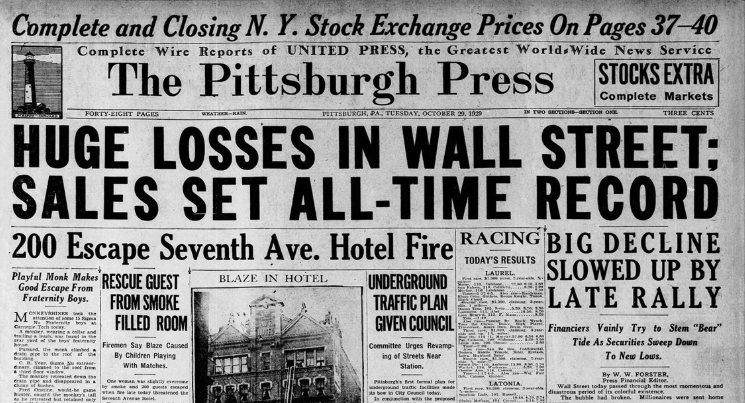
Mark Spitznagel, who made $1B in a single day during the 2015 flash crash, warned markets are mimicking 1929. Seems extreme but we did just see the worst quarter for the S&P since 2022.
So it’s not so surprising that Vanguard and Goldman Sachs forecasted 5% and 3% annual S&P returns respectively for 2024-2034.
Late last year, Apollo’s chief economist Torsten Slok put it this way: "expect zero in return in the S&P 500 over the coming decade."
Almost no one knows this, but postwar and contemporary art appreciated 10.2% annually with near-zero correlation to equities from 1995–2025 overall.*
And sure… billionaires like Bezos can make headlines at auction, but what about the rest of us?
Masterworks makes it possible to invest in legendary artworks by Banksy, Basquiat, Picasso, and more – without spending millions.
29 exits. Net annualized returns like 16.5%, 17.6%, and 17.8% on works held over 1 year+. $1.3 billion invested. 500+ offerings.*
Shares in new offerings can sell quickly but…
*According to Masterworks data. Past performance is not indicative of future returns. Investing involves risk. Important Reg A disclosures: masterworks.com/cd.
Protect Client Trust in Volatile Markets

When markets get shaky, advisors don’t just manage portfolios. They manage a surge of client emails, questions, and last-minute meetings. BELAY’s free Financial Advisor’s Delegation Guide shows how better delegation protects responsiveness, reduces bottlenecks, and helps your firm stay client-facing when pressure and volume rise fast across the entire firm.
🤝 Reach 80k+ CXOs? Partner with us.
✉️ Got questions or feedback? Reach out.
💰 Like The Core? Support us.