- The Core
- Posts
- Inflation’s Double Trouble
Inflation’s Double Trouble
In partnership with

Good Morning. Even as India deals with fuel price rise and other disruptions because of the war in West Asia, another troubling factor is brewing for the economy. The potential return of the El Niño weather phenomenon could disrupt India's monsoons. This double hit could result in costlier food and energy and strain rural incomes, forcing households to cut back. Inflation may have cooled for now, but these risks can’t be ignored.
India’s equity indices ended in losses on Monday. The BSE Sensex closed at 72,696.39, losing 1,836.57 points or 2.46%. The NSE Nifty50 closed at 22,512.65, losing 601.85 points or 2.60%.
In other news, the rupee falls against the dollar, hitting another record low. Meanwhile, India sees a flood of weight-loss drugs.
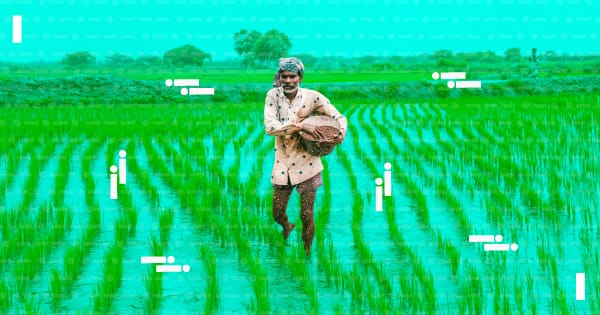
A ‘Double Whammy’ For India: How War And El Niño Could Ignite A New Inflationary Fire
What?
A new shock might await Indian consumers in 2026, who are already troubled by the oil and gas supply dearth. El Niño, which caused a jarring heatwave in 2024, might return as the current La Niña — the antithesis of El Niño, where ocean surface temperatures cool in the central and east-central equatorial Pacific — tapers.
According to Skymet, while it’s a tad early to make sound predictions, the odds of the El Niño phenomenon returning have increased, and there are chances it could affect or even spoil the seasonal rainfall. El Niño is a weather pattern that involves warming of surface waters, weaker winds, and shifting atmospheric circulation.
“We believe that El Niño chances increase to nearly 60% during the peak monsoon of 2026,” AVM GP Sharma, president (Meteorology & Climate Change) at Skymet Weather, told The Core.
Things will become clearer around June. “If it hits, it’s going to be an evolving El Niño this time. It means once it starts, it will increase in magnitude, extend to fall, peak in October and November and start tapering after it,” said Sharma.
Why?
Warm sea surface temperatures in the Pacific Ocean characterise the El Niño phenomenon. Because of this, trade winds falter or reverse, in turn affecting rainfall patterns in Southeast Asia, Australia, and even parts of Africa. It can lead to droughts in Asia/Australia and even floods in the Americas.
The return of El Niño and the geopolitical conflict in West Asia could have a severe impact on India's cooling inflation and steady consumption growth. This "double whammy" of a disrupted monsoon and soaring energy costs could impact rural incomes and force a sharp cut in discretionary spending across the economy.
While retail inflation grew at 3.2% in February, the era of benign inflation might be over. BMI of Fitch has revised headline CPI inflation upwards from the previous 4.5% to average around 5.1% in FY27. It also expects core inflation to hit 4.7% in the fiscal year.
In 2024, El Niño-induced heat waves had impacted businesses as well as individuals. This time around, if monsoons are disrupted, it could be devastating, as it would add to the widespread disruption of supply chains across industries, especially oil and gas, because of the Gulf War. As a result, prices could spiral upwards.
“A weak monsoon could slash kharif yields, spiking food prices (40% of CPI basket) by 6–10%. Brent crude averaging $100/bbl adds fuel and transport cost pressures, pushing headline CPI potentially to 5.5–7%,” Dhananjay Sinha, CEO & co-head of institutional equities at Systematix Group, told The Core.
“AI is Going to Fundamentally Change…Everything”

That’s what NVIDIA CEO Jensen Huang just said about the AI boom, even calling it “the largest infrastructure buildout in human history.”
NVIDIA’s chips made this real-time revolution possible, but now it’s collaborating with Miso to unlock amazing new advances in robotics
Already a first-mover in the $1T fast-food industry, Miso’s AI-powered Flippy Fry Station robots have worked 200K+ hours for leading brands like White Castle, just surpassing 5M+ baskets of fried food.
And this latest NVIDIA collaboration unlocks up to 35% faster performance for Miso’s robots, which can cook perfect fried foods 24/7. In an industry experiencing 144% labor turnover, where speed is key, those gains can be game-changing.
There are 100K+ US fast-food locations in desperate need, a $4B/year revenue opportunity for Miso. And you can become an early-stage Miso shareholder today. Hurry to unlock up to 7% bonus stock.
This is a paid advertisement for Miso Robotics’ Regulation A offering. Please read the offering circular at invest.misorobotics.com.
93.98
That’s how much the rupee slipped against the US dollar, marking a fresh record low. The previous record stood at 93.7350, which the currency hit just days earlier.
Analysts point to escalating tensions in West Asia as the primary trigger. The conflict has sharply increased crude oil prices, raising concerns about prolonged disruptions to global energy supplies. Since India imports most of its oil, higher prices have increased demand for dollars and pressured the rupee.
At the same time, global risk aversion has also strengthened the US dollar. Foreign investors have pulled billions out of Indian markets, adding further downward pressure on the currency.
Future: The outlook remains uncertain. Analysts expect continued volatility if the conflict drags on, with some forecasts placing the rupee closer to 94 in the near term.
Trump Buys Time
In a surprise move, US President Donald Trump announced on Monday a five-day postponement of military strikes on Iranian energy infrastructure, citing "productive" talks toward a resolution. While Iran has reportedly denied direct communication, the pause could provide a critical window for global markets.
In a high-stakes maritime manoeuvre, two Indian-flagged LPG carriers, Jag Vasant and Pine Gas, successfully navigated the Strait of Hormuz, Bloomberg reported.
Overview: Back home, Prime Minister Narendra Modi said the situation was concerning, but maintained that India’s economic fundamentals remain resilient, with adequate stocks of petroleum and coal to weather trade disruptions.
However, the private sector is feeling the heat. SLMG Beverages, Coca-Cola's largest Indian bottler, warned of potential price hikes as the war drives up packaging costs for plastics and cardboard.
Setting: Crude oil prices plummeted over 13% on Monday, with Brent futures dropping nearly $17 to $96 a barrel. Amid this volatility, Minister of State for Petroleum and Natural Gas Suresh Gopi informed the Rajya Sabha that India’s strategic reserves—designed for 9.5 days of emergency cover—are currently at two-thirds capacity.
Generic Drug Rush
Indian drugmakers have launched cheaper versions of Novo Nordisk’s blockbuster diabetes and weight-loss drugs, Ozempic and Wegovy, amid limited patent protection for semaglutide in India.
By the Numbers: At least six companies, including Sun Pharma, Dr. Reddy’s and Zydus Lifesciences, have introduced generics priced up to 70% lower, sharply reducing monthly treatment costs. Over 40 firms are expected to roll out more than 50 versions, intensifying competition in India, currently a fast-growing obesity drug market.
Pivot: Companies are also eyeing exports to regions like Latin America and Turkey. The surge could position Indian firms to capture a share of the global market projected to reach $100 billion.
US Tightens Visas
US visa approvals fell 11% in 2025, with India and China among the hardest hit, according to a Washington Post analysis of newly released State Department data.
The Lead: Authorities issued about 2,50,000 fewer visas between January and August year-on-year. Student visas alone fell by over 30%, while green card approvals also declined for workers and families. The fall comes as the Trump administration tightens screening, expands background checks, and increases denials in several categories. The Signal Brief previously flagged the US student visa slowdown in August 2025.
Impact: Fewer student and work visas directly hit US universities and employers that rely on foreign talent.
India Resets FDI Rules
The Indian government has amended the restrictive Press Note 3 (2020) to accelerate FDI inflows. The move is expected to restore China’s FDI share to its pre-2020 level of 2%, up from a stagnant 0.27%, Crisil Intelligence said in a note on Monday. By easing these bottlenecks, India seeks to emulate the China experience — leveraging foreign equity and technology partnerships to move up the global value chain and strengthen domestic manufacturing capabilities.
Context: The update introduces a 60-day approval window for critical sectors like electronics, polysilicon, and capital goods. This shift aims to resolve a massive backlog. Of the Rs 75,691 crore in proposals received during FY21-22, only 18% had secured clearance.
Setup: This strategic relaxation will fast-track joint ventures and M&As, reducing import reliance while bolstering India’s appeal as a global manufacturing hub by 2047.
2026’s biggest media shift
Attention is the hardest thing to buy. And everyone else is bidding too.
When people are scrolling, skipping, swiping, and split-screening their way through the day, finding uninterrupted moments where your audience is truly paying attention is the priority.
That’s where Performance TV stands out.
Check out the data from 600+ marketers on the most effective channels to capture audience attention in 2026.
✍️ Zinal Dedhia, Kudrat Wadhwa, Shubhangi Bhatia | ✂️ Rohini Chatterji | 🎧 Joshua Thomas, Vishnu Rajeev
🤝 Reach 80k+ CXOs? Partner with us.
✉️ Got questions or feedback? Reach out.
💰 Like The Core? Support us.