- The Core
- Posts
- Hyundai’s Toughest India Test
Hyundai’s Toughest India Test
In partnership with

In partnership with

Good Morning. For nearly two decades, Hyundai comfortably held India’s number two carmaker spot, powered by blockbusters like the Santro and Creta. Now, a revitalised Tata Motors and Mahindra have pushed it down to fourth place. The challenge is bigger than market share alone. Hyundai’s product pipeline has thinned, its EV strategy lags rivals, and profits are under pressure from rising competition and discounts.
India’s equity indices ended in losses on Tuesday. The BSE Sensex closed at 74,559.24, losing 1,456.04 points or 1.92%. The NSE Nifty50 closed at 23,379.55, losing 436.30 points or 1.83%.
In other news, the rupee slides to a new record low. Meanwhile, Eli Lilly’s obesity awareness campaign comes under scrutiny.


Hyundai Facing Its Toughest Test Yet From A Revitalised Tata, Mahindra
What?
For the better part of two decades, Hyundai held an unshakeable grip on second place in India's passenger vehicle market. That grip has now loosened. In FY2025-26, the Indian arm of the Korean carmaker slipped to fourth, behind not just Maruti Suzuki, but also a resurgent Mahindra & Mahindra and Tata Motors.
The fall may not be dramatic in isolation, but the numbers behind it are telling. Just four years ago, Hyundai was outselling its rival by more than double. Today, it trails by over 75,000 units.
Compounding the pressure, the company's annual profit has declined for a second consecutive year, a sobering milestone arriving barely 18 months after its high-profile stock market listing.
Why?
The roots of Hyundai's slide run deeper than a few bad years. India's passenger vehicle market grew faster than almost anyone anticipated, but Hyundai was not fully positioned to capitalise on it, constrained by a thinning product pipeline and limited capacity expansion.
"Lifecycle upgrades have come, but fresh nameplates have not, and in a market where Tata and Mahindra have been relentlessly launching new products and stoking buyer anticipation, that absence has been felt," Gaurav Vangaal, Associate Director at S&P Mobility told The Core.
Exports have also stagnated. According to ICICI Securities, volumes have declined at 2% and 1% annually over the last ten and five years, respectively, underperforming Maruti Suzuki.
It also flags a deepening over-reliance on the Creta in the domestic market, a model industry watchers warn risks becoming the Bajaj Chetak, a once-iconic product, overtaken by the market it helped create.
On electrification, the gaps are stark: no hybrid, no dedicated mass-volume EV, and rivals pulling decisively ahead. The carmaker that set the benchmark is now struggling to meet it.
What Next?
Hyundai is not standing still. The company has committed to over two dozen product interventions over the next five years, including seven new nameplates. "We have every intention to come back to the number two position…And we will get it back, sooner than later," MD and CEO Tarun Garg said.
For the current fiscal year, two new SUVs are planned, with the company targeting 8–10% domestic sales growth.
Garg, who took charge on January 1 this year, also became the first Indian national to lead Hyundai India, a leadership shift that brings with it both opportunity and pressure to reclaim lost ground.
For a company that arrived in India as an unknown and left its rivals scrambling, the question is whether three decades of hard-won market knowledge is enough to turn the tables, or whether this time, the market has simply moved too far ahead.
Attio is the AI CRM for high-growth teams.
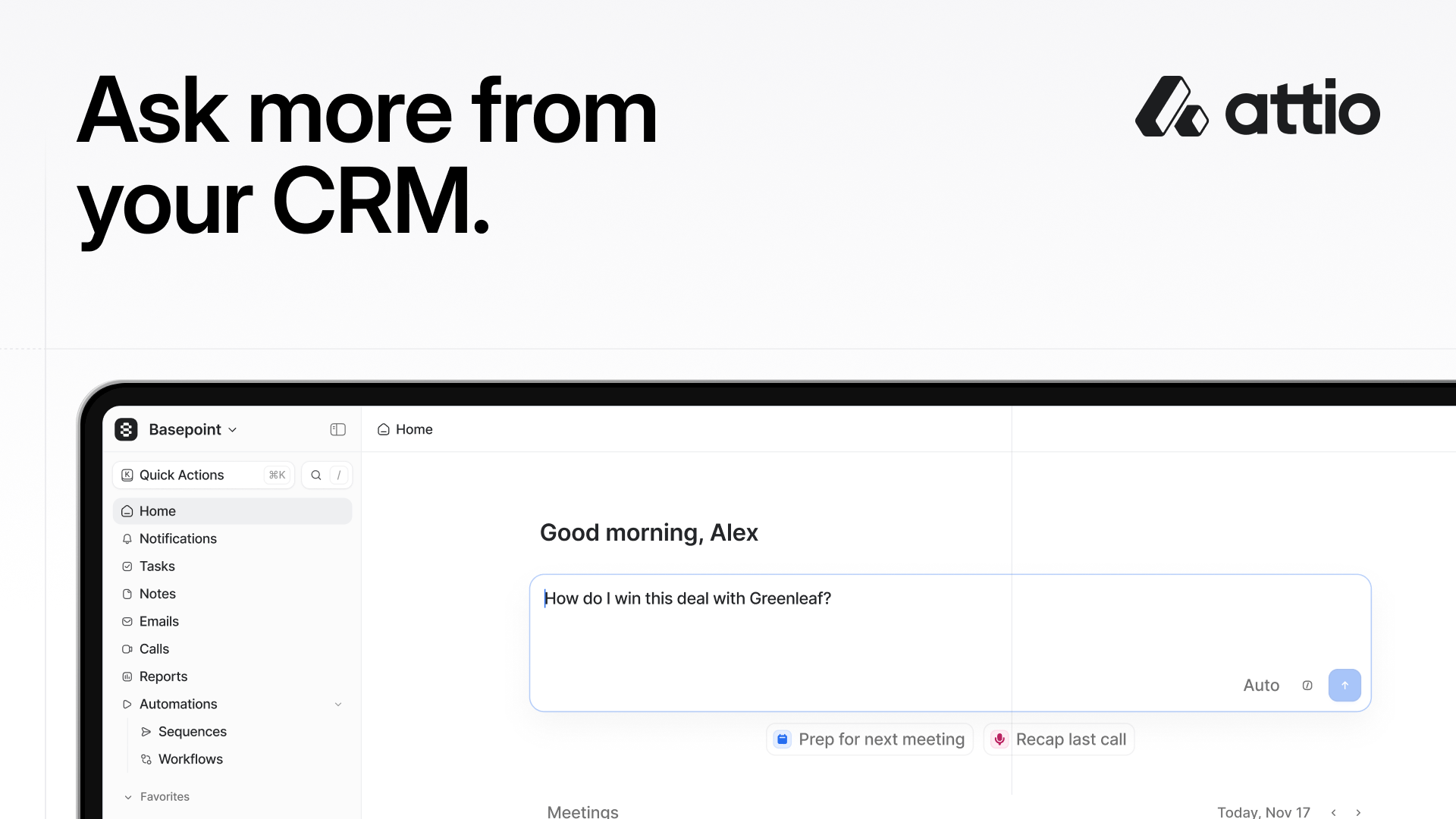
Connect your email, calls, product data and more, and Attio instantly builds your CRM with enriched data and complete context. Whether you’re running product-led growth or enterprise sales, Attio adapts to your unique GTM motion.
Then Ask Attio to plan your next move.
Run deep web research on prospects. Update your pipeline as you work. Find customers and draft outreach emails. Powered by Universal Context, Attio's intelligence layer, Attio searches, updates, and creates across your data to accelerate your workflow.
Ask more from your CRM.
Rs 95.74
That’s how low the Indian rupee fell against the US dollar on Tuesday, marking a fresh record low as fading hopes of a ceasefire between the US and Iran kept oil prices elevated and rattled investor sentiment.
The Lead: The rupee weakened amid a sharp rise in crude oil prices, persistent foreign portfolio investment outflows, and concerns over India’s widening import bill. Brent crude has surged nearly 50% since the Iran conflict began in late February, crossing $107 per barrel this week.
Analysts say India remains especially vulnerable because it imports most of its crude oil needs. Higher oil prices increase demand for dollars from oil importers, putting additional pressure on the rupee.
Foreign investors have also continued pulling money out of Indian equities. Reuters reports that overseas investors have withdrawn more than $20 billion from Indian markets since the conflict began, worsening pressure on the currency.
Break: The fall in the rupee also adds context to the Modi government’s recent push for austerity. But as The Core Report recently argued, the Centre’s calls for spending restraint may have come “two months too late”, given how sharply oil prices and external risks had already escalated. With crude prices climbing and capital outflows intensifying, the government now faces mounting pressure on both the fiscal deficit and the rupee at the same time.
Hormuz Standoff Tests India's Reserves
Shipping traffic through the Strait of Hormuz remained at a standstill Tuesday after President Trump rejected Iran's latest peace offer, calling it "a piece of garbage" and warning the ceasefire was on "life support,” Bloomberg reported.
Iran had demanded sanctions relief and the lifting of Washington's naval blockade in exchange for restoring passage through the strategically vital waterway. Trump is set to meet Chinese President Xi Jinping in Beijing on Thursday amid the mounting pressure.
Critical Moment: India, caught in the crossfire, has declined Russia's offer of sanctioned LNG despite growing supply shortfalls, leaving a tanker bound for its shores in limbo, Reuters reported.
Catch Up Quick: Oil Minister Hardeep Singh Puri on Tuesday said there is no crisis in India, and that the country has never imported LNG from Russia at all. India has 60 days of crude oil and LNG reserves, and 45 days of LPG reserves available.
Meanwhile, multiple domestic LPG customers have received messages warning that their subsidy may be discontinued if their gross taxable income exceeds Rs 10 lakh, thereby sparking confusion, as many of them are already paying full price.
Inflation Inches Up
India’s retail inflation rose marginally to 3.48% in April from 3.40% in March, driven mainly by higher food prices, according to government data released on Tuesday. Food inflation climbed to 4.20%, with tomato and cauliflower prices rising sharply even as potato and onion prices remained lower.
How We Got Here: The uptick in food prices added to concerns over inflation risks amid elevated global crude oil prices and fears of a below-normal monsoon. Economists said sustained high energy costs could eventually feed into broader consumer prices and pressure the rupee.
Forecast: India’s inflation has remained below the RBI’s 4% target for much of the past year due to softer food prices and stable core inflation. However, rising geopolitical tensions in West Asia have lifted crude oil prices, while monsoon uncertainty has increased concerns over future food inflation.
The RBI has projected CPI inflation at 4.6% for FY27 while warning of upside risks from energy and weather-related disruptions.
AI Ad Rules Incoming
The Advertising Standards Council of India (ASCI) has released draft guidelines for the responsible labelling of AI-generated content in advertising, opening them for public consultation until June 13. The proposed framework follows the Information Technology (Intermediary Guidelines and Digital Media Ethics Code) Amendment Rules, 2026, and focuses on transparency in AI-powered advertising without overregulating the technology itself.
Context: ASCI has proposed a risk-based framework classifying AI-generated ads into high, medium and low risk. High-risk content such as fake endorsements, misleading demos, deepfakes and unauthorised use of a person’s likeness would violate the ASCI Code even if labelled.
Medium-risk content, including virtual influencers, realistic AI-generated settings and synthetic product demos, would require clear disclosure like “Created using AI” or “Enhanced using AI.”
How We Got Here: As brands increasingly use AI tools for advertising campaigns, regulators and industry bodies globally have faced growing concerns around misinformation, manipulated visuals and consumer deception.
ASCI said the draft guidelines are designed to focus on consumer outcomes rather than the use of AI technology itself, requiring disclosures only when synthetic content could materially influence consumer decisions.
Lilly Faces Regulatory Heat
Eli Lilly has halted its obesity awareness campaign in India after facing scrutiny from the country’s drug regulator over concerns that it indirectly promoted its weight-loss drug, Mounjaro. Reuters reported that, in a 16-page letter dated April 10 and sent to the Drugs Controller General of India (DCGI), Lilly said it had halted the campaign ‘out of an abundance of regulatory caution’ following a March 11 advisory from the regulator.
Context: Lilly launched the ‘We Know Now’ campaign in mid-2025, shortly after introducing Mounjaro in India in March 2025. The campaign described obesity as a chronic disease requiring medical treatment, but did not directly mention the drug. Regulators reportedly viewed the advertisements as “surrogate promotion” because they could still drive demand for prescription obesity treatments.
Pivot: India currently prohibits pharmaceutical companies from advertising prescription medicines directly to consumers. Lilly has now paused the campaign and sought regulatory clarity on what qualifies as permissible disease awareness messaging. The dispute comes as obesity rates rise in India and global drugmakers including Eli Lilly and Novo Nordisk race to dominate the country’s fast-growing weight-loss drug market. Novo also faces mounting competition from cheaper Indian generic semaglutide makers after key patents expired earlier this year.
$992 Billion in Art Could Change Hands. Why Are These 71,105 Investors Paying Close Attention?

Deloitte ran the numbers. They project UHNW art and collectibles wealth -- already at $2.5 trillion -- to hit $3.47 trillion by 2030.
The institutional world has been quietly preparing for this. Back in 2011, 25% of wealth managers surveyed offered art-related services. In 2024, 51%. Family offices now average a 13.4% allocation to art and collectibles.
And it’s not just because they love art. It’s because they like the math.
These positions were built over decades through private dealer relationships most investors never had. The access just wasn't there.
Masterworks is changing that by allowing individuals to invest in shares of blue-chip artwork by artists like Basquiat, Warhol, and Picasso. Their track record to-date:
71,000+ investors
$1.3B deployed across 525+ artworks
29 closed sales
Net annualized returns like 16.5%, 17.6%, and 17.8%, not including those unsold.
Investing involves risk. Past performance is not indicative of future returns. See important disclosures at masterworks.com/cd.
Markets Sink as West Asia War Fears Take Hold
On Episode 871 of The Core Report, financial journalist Govindraj Ethiraj talks to Neil Atkinson, Senior Fellow at The National Center for Energy Analytics as well as Deep Vadodaria, Managing Director at Nila Spaces.
Markets sink as economic uncertainty and West Asia war fears take hold
Rupee hits fresh low, as outflows continue
What is the actual cost of a barrel of oil, it's not what you see
not many people want to move to offshore financial centre GIFT City
New guidelines for use of AI in advertising are on the anvil

✍️ Zinal Dedhia, Kudrat Wadhwa, Shubhangi Bhatia, Pritha Pahari | ✂️ Rohini Chatterji | 🎧 Joshua Thomas, Vishnu Rajeev
🤝 Reach 80k+ CXOs? Partner with us.
✉️ Got questions or feedback? Reach out.
💰 Like The Core? Support us.
