- The Core
- Posts
- From Participation to Influence: Three Signals of India’s Next Economic Shift
From Participation to Influence: Three Signals of India’s Next Economic Shift
The Weekend Playlist
In partnership with

Good Morning. This week’s conversations point to a deeper change underway in India’s economy—quiet, structural, and easy to miss if you look at them in isolation.
An oil major is no longer just drilling for hydrocarbons, but racing to secure critical minerals that will decide who controls EVs, defence supply chains, and future manufacturing. Welfare policy is moving from food and fuel to direct cash in women’s hands, forcing a rethink of how gender equity is actually delivered. And India’s Global Capability Centres are shedding their back-office role to become strategic, AI-first hubs shaping how global companies work.
Taken together, these shifts point to an India that is steadily moving from participation to influence.
WEEKEND EDITION (Energy Special)
The Oil Company Betting on India’s Critical Minerals Future
India’s energy conversation is no longer just about oil and gas. It is increasingly about graphite, vanadium, potash, and rare earths—minerals that sit at the heart of EVs, defence systems, fertilisers, and advanced manufacturing.
In this Core Report Energy Special, Govindraj Ethiraj speaks with Ranjit Rath, Chairman & Managing Director of Oil India Limited, on how a legacy oil major is repositioning itself for India’s next phase of energy security—ahead of India Energy Week 2026.
Here are the key takeaways:
Why critical minerals matter now
India’s energy security is expanding beyond hydrocarbons to minerals essential for clean energy, defence, and technology.
Import dependence—especially on China—has turned these minerals into strategic assets.
From oil fields to mineral blocks
Oil India is exploring graphite and vanadium in Arunachal Pradesh, minerals crucial for batteries and energy storage.
Potash in Rajasthan could significantly reduce India’s fertiliser import bill.
Mining is only half the battle
Processing and refining capacity matter as much as extraction.
Without domestic processing, India risks replacing oil dependence with mineral dependence.
Rare earths and geopolitics
China’s dominance in rare earth supply chains makes diversification urgent.
India’s strategy must focus on technology, partnerships, and downstream capability.
Oil and gas still evolving
Deep water and ultra-deep water exploration remain priorities.
New seismic re-imaging, AI, and data-driven exploration are reshaping how reserves are assessed.
Looking ahead to India Energy Week 2026
Oil India plans to showcase its transition—from hydrocarbons to critical minerals—while courting global partners and technology leaders.
The big picture:
Oil India’s strategy signals a broader shift in India’s energy playbook—where oil, gas, and critical minerals converge to secure the country’s industrial and strategic future.
INDIA ENERGY WEEK 2026
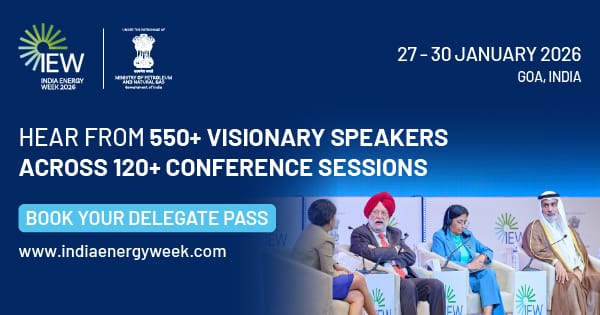
India Energy Week returns for its 4th edition from 27–30 January 2026 in Goa, held under the patronage of the Ministry of Petroleum & Natural Gas and co-organised by FIPI and DMG Events.
As India advances its role in the global energy transition, the event will bring together policymakers, industry leaders and innovators to shape practical pathways toward a secure, sustainable and affordable energy future.
IEW 2026 will spotlight India’s leadership in balancing energy access with decarbonisation, while showcasing strategic investments, emerging technologies and global partnerships driving the next era of energy progress.
HOW INDIA’S ECONOMY WORKS
Can Cash Transfers Deliver Gender Equity?
In this episode, Puja Mehra speaks with economist N. R. Bhanumurthy on what India’s women-focused cash transfer schemes reveal about social policy. Key takeaways:
Cash works better than kind: Evidence from early pilots in Madhya Pradesh—later shaping Ladli Behna—shows cash transfers lead to better nutrition outcomes for women and children.
Design beats intent: Improvements in beneficiary identification and direct payments have been as important as higher spending.
Not crowding out social sectors: The real problem isn’t cash transfers replacing health or education spending, but hundreds of overlapping, poorly rationalised schemes.
Mobility is a missing link: Limited access to transport remains a major barrier for women; free bus travel could deliver long-term economic gains.
Rethink gender budgeting: India needs to shift from tracking how much is spent on women to measuring what actually changes for them.
The bottom line: Well-designed welfare can expand women’s agency—but only if policy focuses on outcomes, not optics.
THE CORE QUIZ
Which country recently restricted social media access for children under 16, triggering a global policy debate? |
MESSAGE FROM OUR SPONSOR
Shoppers are adding to cart for the holidays

Over the next year, Roku predicts that 100% of the streaming audience will see ads. For growth marketers in 2026, CTV will remain an important “safe space” as AI creates widespread disruption in the search and social channels. Plus, easier access to self-serve CTV ad buying tools and targeting options will lead to a surge in locally-targeted streaming campaigns.
Read our guide to find out why growth marketers should make sure CTV is part of their 2026 media mix.
ACCENTURE VIEWPOINT
How India’s GCCs Are Redefining Global Work
India’s Global Capability Centers are no longer back offices. They are becoming strategic engines of global enterprises—and in some cases, reshaping how headquarters themselves work.
In this conversation, Paul Jeruchimowitz, Senior Managing Director and GCC Practice Lead at Accenture, explains what is driving this shift and why India sits at its centre.
What’s changing:
From execution to ownership
GCCs are moving beyond service delivery to influence strategy, product thinking, and enterprise-wide decisions.The remote-work inflection point
The pandemic proved critical work can be done anywhere, accelerating trust in distributed, global teams.India’s AI-first talent advantage
Global companies need digital- and AI-native skills at scale—and India is uniquely positioned to supply them.Reverse cultural immersion
New ways of working, collaboration, and innovation are now flowing from India back to headquarters.The new GCC challenge
Winning the talent war, building local leadership, and proving value—not headcount—will define success.
The bottom line:
India’s GCCs are no longer supporting global businesses. They are helping run—and reinvent—them.
MESSAGE FROM OUR SPONSOR

The best HR advice comes from people who’ve been in the trenches.
That’s what this newsletter delivers.
I Hate it Here is your insider’s guide to surviving and thriving in HR, from someone who’s been there. It’s not about theory or buzzwords — it’s about practical, real-world advice for navigating everything from tricky managers to messy policies.
Every newsletter is written by Hebba Youssef — a Chief People Officer who’s seen it all and is here to share what actually works (and what doesn’t). We’re talking real talk, real strategies, and real support — all with a side of humor to keep you sane.
Because HR shouldn’t feel like a thankless job. And you shouldn’t feel alone in it.
THE TEAM
✍️ Zinal Dedhia, Kudrat Wadhwa | ✂️ Rohini Chatterji | 📹️ Maitrayee Iyer | 🎧 Joshua Thomas
🤝 Reach 80k+ CXOs? Partner with us.
✉️ Got questions or feedback? Reach out.
💰 Like The Core? Support us.