- The Core
- Posts
- Energy Crisis: Delay Now, Pay Later
Energy Crisis: Delay Now, Pay Later
In partnership with

Good Morning. For weeks, the government has been assuring the Indian people that our fuel supplies are safe. But go on the ground, and things don't look so stable. Yes, household gas supplies have been prioritised, but businesses and industries are already facing the brunt. While saving energy would be a good plan, the looming elections are likely keeping the government from taking tough steps.
In other news, India’s carbon emissions grew at the slowest pace ever. Meanwhile, Captain Shiv Samrat Kapur, a former mariner who has captained ships through the Strait of Hormuz, explains the challenges for seafarers and ship owners during the current crisis.

Conserving Energy Early Is India's Best Insurance, But Elections Are Delaying Tough Calls
The US-Israeli war on Iran continues, with Iranian cities being bombed regularly and Iran retaliating intermittently with missiles that should not have been launched if American President Donald Trump’s claim of having obliterated Iran’s missile launch capability were true.
Iranian missiles have been getting past Israel’s Iron Dome missile defence system and doing damage to assorted Israeli towns.
Back home, the government has assured the people that India has adequate supplies of petrofuels and that rumours of shortage are groundless. This is true to a large extent but not fully. India does face a shortage of LPG and natural gas.
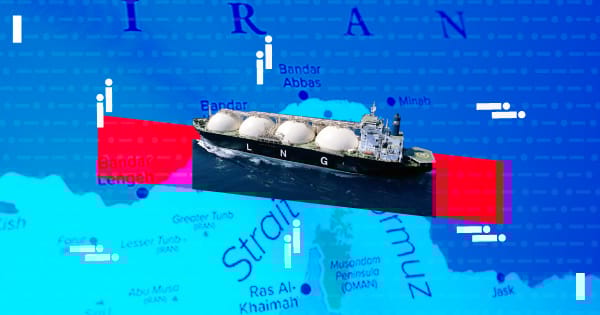
India imports about 60% of its LPG requirement, and the bulk of it comes through the Strait of Hormuz, which is closed. India is self-sufficient in natural gas up to 50% of its requirement, while the rest has to be imported, mostly from Qatar.
LPG can be imported from other countries — Argentina has started supplying small quantities, for example — and domestic production increased, by reducing the production of petrol at our oil refineries.
But the scope for substituting stalled imports from the Persian Gulf is limited, and the allocation of LPG to the commercial sector, including hospitality, meaning eateries, stands sharply curtailed. Many have shut down, unable to find substitutes, and laid off workers.
The urban poor who live in slums and unregulated rental housing fail to get proper gas connections from oil marketing companies. They buy 5 kg cylinders filled with commercial LPG. Curtailed supplies of commercial LPG hurt them. Migrant workers have started trooping back home, unable to cook.
Election Optics vs Reality
The government has not asked companies to resume work-from-home. This is rational from the point of view of impending elections — which government would want to give the Opposition a chance to accuse it of not being able to manage fuel supplies?
However, economic logic suggests that conserving energy early on is the best insurance against the damage that inevitably rising energy prices would impose.
India has more than enough refining capacity to meet all domestic demand for petrol, diesel and aviation turbine fuel, which is nothing but a refined form of kerosene, provided the crude comes in.
Crude oil has relatively elastic supplies, unlike natural gas. Natural gas has to be liquefied — cooled under high pressure — before being exported in special tankers that can maintain the high pressure and ultra-low temperature.
Even though the US and Russia have plenty of natural gas they can sell, they do not have spare liquefaction capacity. And that capacity cannot be created in a hurry. For the existing supplies, Japan, South Korea, and Taiwan would compete aggressively, apart from China and Europe.
Minimising commutes and travel is one way to cushion the impact of higher fuel prices. That is why working from home is a desirable option right now.
When it all clicks.

Why does business news feel like it’s written for people who already get it?
Morning Brew changes that.
It’s a free newsletter that breaks down what’s going on in business, finance, and tech — clearly, quickly, and with enough personality to keep things interesting. The result? You don’t just skim headlines. You actually understand what’s going on.
Try it yourself and join over 4 million professionals reading daily.
‘Atmosphere Of Fear On Board, Seafarers Scared’: Captain Shiv Samrat Kapur
Seafarers face an "atmosphere of fear" aboard LPG carriers trapped by Iran's Strait of Hormuz blockade, with crews reluctant to load amid high risks and owners demanding steep premiums, said Captain Shiv Samrat Kapur, managing director of the Indian arm of shipbroking firm Sentosa Shipbrokers in an interview to The Core.
"There are a few unfortunate few which are loaded and are stuck. They are not Indian ships which are able to come out. I can at least think of three or four offhand ships like owners, who I have spoken to. So of course, they're scared," said Kapur.
Additional bonuses are offered for high-risk transits, yet one Indonesian PSU tender was rejected as empty vessels stay idle, while loaded ones remain stuck inside. No fresh loadings are occurring at Gulf ports like Ras Tanura, Ras Laffan, or Ruwais.
"Owners need a big premium to load out in the current situation. Because what happens is like, whether you get hit on an empty ship or a full ship, it doesn't matter," said Kapur
Transit from deep ports takes 1.5-2 days to clear Hormuz, plus 3-5 days to India's West Coast hubs.
Iranian oil has been mostly bought by Chinese independent refiners in recent years and is often rebranded as originating from another country, according to Reuters.
0.7%
That's how much India’s carbon dioxide emissions grew in 2025, marking the slowest annual increase in over two decades, according to Carbon Brief. This sharp deceleration from the previous 4 – 11% growth trend followed a record 58 GW surge in clean energy capacity, including 47 GW of solar. Consequently, coal-fired power output saw its first non-Covid decline since 1973.
Context: While power sector emissions fell 3.8% due to renewable integration and weak electricity demand, total national output rose slightly as industrial gains in steel and cement offset the drop in coal power. In comparison, China’s emissions declined by 0.3% over the same period.
Outlook: Analysts say future decarbonisation now rests on resolving the apparent contradiction between clean-energy growth and planned expansions in coal and petrochemicals.
Iran Denies Peace Talks
Conflicting signals emerged from Washington and Tehran as the West Asia conflict entered its fourth week. US President Donald Trump claimed Iranian leaders are desperate for a deal but fear domestic reprisal, while Iranian Foreign Minister Abbas Araqchi countered that Tehran has no intention of negotiating, dismissing current intermediary messages as mere "warnings,” Reuters reported.
This diplomatic friction persists despite the heavy toll on Iran’s leadership, including the reported death of Ayatollah Ali Khamenei and the wounding of his successor, Mojtaba.
Flashpoint: The crisis has triggered the worst energy shock in history following the closure of the Strait of Hormuz. India, traditionally reliant on the Middle East for 40% of its oil, has moved into mission mode. The Petroleum Ministry confirmed it has secured a 60-day crude supply by diversifying to 41 global suppliers and ramping up Russian imports under US waivers. However, internal pressures are mounting; the government recently issued an advisory to the automotive sector to tighten production and shift to electricity to conserve fuel.
Setting: On the international stage, pressure is mounting as the WTO Ministerial Conference begins in Cameroon, with activists and European lawmakers calling for the suspension of Israel’s "Most-Favoured-Nation" status, Hindu Businessline reported.
Meanwhile, a delicate backchannel remains: Israel reportedly removed Araqchi from its "hit list" following Pakistani mediation, preserving a slim thread for future dialogue.
SEBI Probes HDFC
India’s market regulator, SEBI, has launched a preliminary review into the resignation of former HDFC Bank Chairman Atanu Chakraborty for potential governance violations, Reuters reported. In his departure letter, Chakraborty cited "happenings and practices" at the bank that conflicted with his ethics, triggering an 8.7% stock slide and wiping out $16.3 billion in market value over three sessions.
Overview: SEBI is examining whether Chakraborty or other directors failed their fiduciary duties or suppressed material information. While the Reserve Bank of India found "no material concerns" regarding the bank's conduct, SEBI is reviewing the adequacy of disclosures to protect minority investors.
Setup: Chakraborty denied making insinuations and stated he was unaware of the probe. Meanwhile, HDFC Bank has appointed external law firms to assess the concerns raised.
Blue Beats White
Average minimum salaries for blue-collar roles rose 8.60% year-on-year, outpacing several entry-level white-collar jobs and signalling a structural shift in India’s labour market, according to a report by blue and grey-collar recruitment platform WorkIndia.
By the Numbers: Blue-collar wages rose to Rs 15,265 in 2025, while entry-level white-collar salaries grew slower at 6.75% to Rs 15,756. Delivery and driver roles saw salary jumps of up to 16%, while manufacturing roles grew around 11%, reflecting strong demand for skilled operational workers. In contrast, administrative roles saw weaker growth due to high candidate supply. The report also flagged persistent gender gaps, with women earning 20-30% less than men across roles.
Pivot: “India’s job market is undergoing a silent reset. Demand for frontline and gig roles continues to rise sharply, while entry-level white-collar jobs face oversupply. Employers are prioritising skills and availability over formal qualifications, and this trend is likely to deepen as businesses focus on efficiency and scale,” said Nilesh Dungarwal, co-founder and CEO of WorkIndia.
Insurance Growth Story
The Finance Ministry said India’s health insurance premiums exceeded Rs 1.2 lakh crore in 2024-25, recording around 9% growth over the previous year. It attributed the increase to ageing policyholders, higher coverage and enhanced product features.
Fast Facts: The ministry said the Insurance Regulatory and Development Authority of India has introduced timelines for faster claim processing. Insurers must decide cashless pre-authorisation requests within one hour and final discharge approvals within three hours. The statement said these measures aim to reduce delays in hospital discharge.
The Shift: It added that the incurred claims ratio stood at about 86%. The ministry also said insurers resolved most grievances within prescribed timelines, indicating improved service delivery in the health insurance sector.
Markets Turn Nervous Again
On Episode 832 of The Core Report, financial journalist Govindraj Ethiraj talks to Ben Powell, Managing Director, Chief Investment Strategist for APAC within the BlackRock Investment Institute.
Markets turn nervous again as US-Iran peace talks falter without starting
What a US ground invasion will target
India has crude supplies for at least 61 days
Blackrock says investing has to become active in the post-war era and one-way bull markets are gone

✍️ Zinal Dedhia, Kudrat Wadhwa, Shubhangi Bhatia | ✂️ Rohini Chatterji | 🎧 Joshua Thomas, Vishnu Rajeev
🤝 Reach 80k+ CXOs? Partner with us.
✉️ Got questions or feedback? Reach out.
💰 Like The Core? Support us.