- The Core
- Posts
- Deal Done, Work Begins
Deal Done, Work Begins
In partnership with

Good Morning. The “mother of all deals” may have been signed and already celebrated, and it is indeed a cause for celebration. But Indian businesses have to shape up or ship out to avail the tariff waivers as part of the deal. These businesses will have to contend with the European Union’s (EU’s) strict regulatory requirements and environmental standards to do business there. Are they prepared?
Indian equity indices ended with another day of gains on Wednesday. The BSE Sensex closed at 82,345, gaining by 487 points or 0.60%. The NSE Nifty50 closed at 25,343, gaining 167 points or 0.66%.
In other news, gold continues to rally and hit new records. Meanwhile, chartered Learjet 45 crashes in Maharashtra, killing the state’s deputy chief minister, Ajit Pawar.
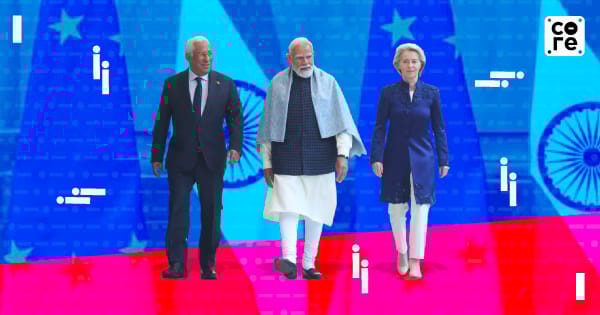
India’s EU Pact Won’t Work Without A Home-Grown Reset Of India Businesses
What?
After two decades of negotiations, the trade deal between India and the EU marks a transformational shift not only for businesses but also for the global order. Termed as the "mother of all deals", it bridges the world’s fourth and second largest economies, creating a combined market of Rs 2,091 lakh crore ($24 trillion), catering to 2 billion people.
The deal strengthens the position of India in a rules-based trading environment, which can help hedge against global economic volatility and fractured global supply chains.
The numbers are staggering. The agreement provides enhanced tariff liberalisation for key labour-intensive sectors, including textiles, leather, gems & jewellery, footwear, and related manufactured products. Once enforced, duties will be eliminated immediately on around 70.4% of tariff lines, covering about 90.7% of India’s export value into the EU, significantly improving competitiveness relative to current Most-Favoured-Nation tariffs in the EU market.
Although senior Indian officials have stated a strong intention for the agreement to enter into force within the 2026 calendar year, most independent analyses suggest operational commencement is more likely in early 2027 after the completion of legal and ratification steps.
The real long-term integration into the European supply chain will require more than just lower tariffs. It demands a strategic pivot by Indian businesses to master the EU’s rigorous regulatory standards, sustainability mandates, and digital trade rules.
Why Does It Matter?
The EU's biggest barrier is often not tariffs, but it’s strict regulatory standards. Exporters must invest in quality control to meet the EU's non-negotiable health, food safety, and environmental standards, as rejected consignments in the EU are often destroyed rather than returned.
Not only are safety and quality sacrosanct, but there are also international environmental and
Exporters should audit their supply chains for environmental impact and labour rights (e.g., child labour, workplace safety) to avoid being locked out of the market.
What digital and e-commerce trade rules must Indian businesses prepare themselves for?
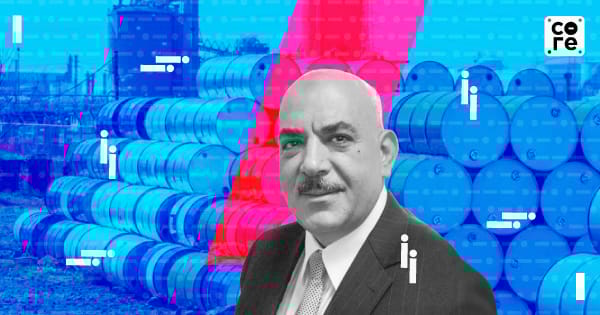
Oil Glut Fears Built On Bad Math, Warns Energy Analyst Anas Alhaji
Global oil market projections of a massive surplus in 2026. But this may be based on fundamental accounting errors and a misunderstanding of geopolitical trade shifts, energy expert Dr Anas Alhaji told The Core in the run-up to Indian Energy Week in Goa.
While the International Energy Agency (IEA) and major financial institutions warn of a deep market surplus by the first quarter of 2026, current market data suggests a far more balanced reality.
Failed Predictions
Forecasts suggesting oil prices would collapse into the $40 range have repeatedly failed to materialise. Despite persistent warnings of a glut since early 2025, Brent crude has remained steady in the $60 to $65 range. Alhaji notes that institutional forecasts have a long history of inaccuracy regarding consumption trends.
"If you look at the IEA forecasts, they've been for growth in oil demand, they've been wrong every year for the last 18 years," Alhaji stated. He argued that these agencies consistently underestimate demand while exaggerating the impact of "oil on water" — crude currently in transit.
Distorted Data, Shifting Routes
The narrative of an oversupplied market is often skewed by a failure to account for longer shipping distances. For example, Brazil has shifted its exports from the U.S. and Europe to China. Because the distance to China is triple that of previous routes, more oil remains on water for longer periods, appearing as an increase in inventory even though the actual supply has decreased.
Similar distortions appear in North America. Canadian oil previously moved through U.S. pipelines and was not counted as "oil on water." With new pipelines to the West Coast now sending 400,000 barrels a day to China, analysts are counting this as "extra" supply rather than a simple shift in transportation mode.
This series is brought to you in partnership with India Energy Week 2026.
Introducing the first AI-native CRM

Connect your email, and you’ll instantly get a CRM with enriched customer insights and a platform that grows with your business.
With AI at the core, Attio lets you:
Prospect and route leads with research agents
Get real-time insights during customer calls
Build powerful automations for your complex workflows
Join industry leaders like Granola, Taskrabbit, Flatfile and more.
$5,300
That’s the level gold prices crossed, hitting a record high in a rapid multi-day rally. The metal has risen more than 20% since the start of the year, cementing its position as one of the strongest global assets.
Future: Analysts say gold could climb to $6,000 an ounce this year as investment demand shows little sign of easing. Investors, from central banks to retail buyers, continue to treat gold as a hedge against uncertainty rather than a short-term trade.
Catch Up Quick: Escalating conflicts and a visible weakening of the existing global order have pushed investors toward assets that sit outside governments and currencies. A softer US dollar has added fuel to the rally by making gold cheaper for buyers across the world.
Implications: As domestic prices in India hit record highs, Indian buyers increasingly prefer bars and coins over jewellery, avoiding making charges that rise alongside bullion prices. The rally has also exposed stress within the jewellery market. Local jewellers face mounting pressure as higher prices strain cash flows and make inventory harder to manage. Meanwhile, larger branded chains such as Tanishq and Kalyan Jewellers, backed by stronger financing and scale, continue to gain ground.
Crash Shocks Maharashtra
Maharashtra’s deputy chief minister, Ajit Pawar, died on Wednesday after a chartered Learjet 45 crashed while approaching Baramati, the Directorate General of Civil Aviation (DGCA) said. The aircraft, operated by non-scheduled carrier VSR Ventures, was flying from Mumbai to Baramati when it went down, killing all five people on board, including two crew members and two staff.
Flashpoint: The DGCA said no one survived the crash. Pawar was travelling to his home region to campaign in local body elections. According to Reuters, media reports said the aircraft attempted an emergency landing before the accident, though the cause remains unclear.
Fast Facts: VSR Ventures holds a valid operating permit and operates a fleet of 17 aircraft. The DGCA last audited the operator in February 2025, with no major findings.
The AI Takeover
Amazon will cut about 16,000 corporate jobs globally as it restructures its operations amid rising competition and a deeper push into artificial intelligence, according to a blog post by Amazon’s Senior Vice President of People Experience and Technology.
The Scoop: The cuts, which largely target office and management roles, follow an earlier round of layoffs affecting about 14,000 workers announced in October 2025. Amazon said the changes aim to “strengthen our organisation by reducing layers, increasing ownership, and removing bureaucracy.”
Setting: The move highlights how AI is reshaping corporate hiring across the tech sector, as companies automate routine coding and internal coordination, reducing the need for large support and managerial teams. For instance, in July 2025, Tata Consultancy Services announced plans to cut roughly 12,000 jobs as part of AI-led restructuring and skill realignment.
BYD Reworks India Strategy
Chinese car manufacturer BYD is exploring options to expand in India, including local assembly, as demand for its electric vehicles outpaces import limits, according to a Bloomberg report. India sales jumped about 88% last year to roughly 5,500 cars, stretching rules that cap imports of each fully built model at 2,500 units.
Pivot: The Chinese automaker is evaluating semi-knocked-down assembly and seeking local safety and regulatory approvals for additional models to ease constraints. Dealers are sitting on hundreds of bookings, highlighting strong demand despite import duties of up to 110%.
What's Next? Any manufacturing move would follow visits by senior executives. Using SKD assembly could significantly reduce tariffs, making expansion in one of the world’s fastest-growing auto markets more viable.
Boeing Sees India Surge
Boeing said airlines in India and South Asia are expected to add 3,290 commercial aircraft over the next 20 years, up from a prior forecast of 2,835 jets, driven by strong economic growth, a rising middle class and increasing air travel demand, Reuters reported.
The Lead: The company estimates the region will need 2,875 single-aisle planes and 395 wide-body aircraft as carriers expand capacity and modernise fleets. India and South Asia have become among the world’s fastest-growing aviation markets, with airlines aggressively growing networks amid airport upgrades.
Context: India is now the world’s third-largest domestic aviation market and the fastest-growing, led by IndiGo and Air India. Boeing said infrastructure expansion remains critical, with over 30% of India’s network still concentrated around Delhi and Mumbai.
Become An AI Expert In Just 5 Minutes

If you’re a decision maker at your company, you need to be on the bleeding edge of, well, everything. But before you go signing up for seminars, conferences, lunch ‘n learns, and all that jazz, just know there’s a far better (and simpler) way: Subscribing to The Deep View.
This daily newsletter condenses everything you need to know about the latest and greatest AI developments into a 5-minute read. Squeeze it into your morning coffee break and before you know it, you’ll be an expert too.
Subscribe right here. It’s totally free, wildly informative, and trusted by 600,000+ readers at Google, Meta, Microsoft, and beyond.
It's The Worst Start To A Year In A Decade
On Episode 786 of The Core Report, financial journalist Govindraj Ethiraj talks to Dr. Ajit Ranade, Economist and Former Vice Chancellor of Gokhale Institute of Politics and Economics in Pune as well as Ashok Atluri, Chairman and Managing Director at Zen Technologies.
It's the worst start to a year in a decade, will it shift?
Gold now clearly represents the hedge to an uncertain global economy
A macro view on the Union Budget
India’s anti-drone systems are gearing up for battle
Why a toilet company is benefiting from the chip mania

✍️ Zinal Dedhia, Kudrat Wadhwa, Shubhangi Bhatia | ✂️ Rohini Chatterji | 🎧 Joshua Thomas
🤝 Reach 80k+ CXOs? Partner with us.
✉️ Got questions or feedback? Reach out.
💰 Like The Core? Support us.