- The Core
- Posts
- Coal To The Rescue?
Coal To The Rescue?
In partnership with

Good Morning. Coal is back at the centre of the global energy mix. The disruption of gas supplies from West Asia has forced countries to turn to coal as a substitute, pushing prices to multi-year highs. For India, this offers relative security. Strong domestic coal production is helping keep the power grid stable, even as global volatility raises costs for industries dependent on imports.
India’s equity indices ended higher on Tuesday. The BSE Sensex closed at 76,070.84, gaining 568 points or 0.75%. The NSE Nifty50 closed at 23,581.15, gaining 172.35 points or 0.74%.
In other news, government says all domestic refineries are working at “high capacity”. Meanwhile on this week’s Build on Blockchain, could the technology help protect your data?
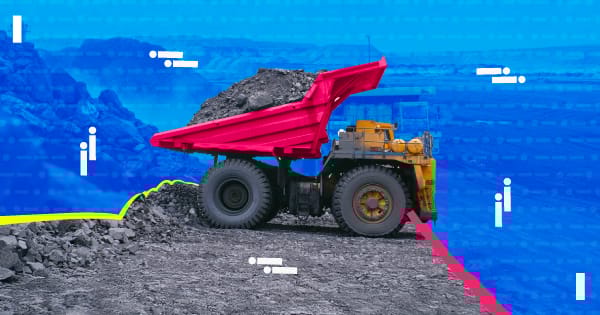
Coal Becomes India’s Defence As West Asia Conflict Ignites Prices
What?
As the supply crunch because of the conflict in West Asia sends global gas prices into a tailspin, coal is back on the boil.
The scarcity of natural gas is forcing many countries to scramble for coal as a substitute, sending prices to multi-year highs. Yet, as the world braces for extensive energy uncertainty, India stands in a position of strength.
India is leveraging its domestic reserves to insulate its power grid from international volatility. While energy-intensive industries face rising input costs, coal can act as a buffer that ensures households and the broader economy remain largely shielded from a 2022-style price explosion.
What’s Behind The Price Rise?
Driven by tightening portside supply and surging vessel freight costs, South African thermal coal prices at Indian ports recently hit a near three-year peak. Now trading at Rs 12,200 ($132) per tonne, the fuel has seen a 15% price spike since the onset of the West Asia conflict, according to data from market intelligence firm BigMint.
Coal prices across different geographies are up as a ripple effect of the stoppage of gas shipped from West Asia. Coal is the closest alternate thermal fuel in the absence of gas supplies.
Unlike India, many countries like Europe and Japan depend heavily on gas, instead of coal, to meet their power generation needs.
“If all Qatari LNG shipped to Asian countries in one year were used in the power sector, the impact would be close to 500 TWh, which is almost as large as South Korea’s entire power supply. Not all of this volume can be offset in the power sector by switching to other thermal fuels, as capacity is limited,” Pat See Khoo, Senior Principal Analyst, Global Seaborne Thermal Coal, S&P Global Energy, said in a note earlier this month.
What About India?
More than 70% of the electricity generated in India is dependent on burning coal. Further, multiple non-power industries such as cement, sponge, iron, fertilisers, also need coal to power their operations.
The all-India Production of thermal coal during 2024-25 was 981.053 million tonnes (Mt), and it imported another 186.05 Mt.
While 80% of India’s total coal needs are met from within the country, industry analysts believe that domestic sources may not be immune to price rise.
India’s coal consumption is best understood through the two distinct profiles — the regulated power sector and non-regulated industry. According to Satnam Singh of CRISIL Intelligence, nearly two-thirds of India’s thermal coal imports in FY25 were consumed by non-power industries like cement, sponge iron, and fertilisers.
While the power grid remains anchored by domestic supply, industrial players are heavily exposed to global price volatility, forced to absorb high-cost imports to maintain operations.
“Industries that depend on imported coal are therefore more exposed to global price volatility and may face higher input costs if coal prices remain elevated,” he said.

How Blockchain Can Help Fix India’s Data-Privacy Problem
What?
Indians are accustomed to receiving a volley of unsolicited calls and messages soon after signing up on a new app or website, despite being on the do-not-disturb, or DND, list.
Phone numbers typically reach telemarketers either because our personal data has either been sold off or forcibly taken away by hackers in a data breach.
There has been a spate of data breaches of late, and Indians are definitely much more cautious about the details they share online, but sometimes there is no choice.
Tthe Indian government eventually decided to step in, and passed the Digital Personal Data Protection Act in 2023 to deal with cases of data misuse.
The Act forces companies to explain exactly how they're using the customer data that they collect. The law also arms individuals with the right to give or withdraw consent, allowing them to decide who can use their personal information.
It sounds perfect on paper. But for companies managing crores of records, it is a serious operational headache just to prove they're handling our data correctly.
This is where technology like blockchain could step in and help solve this part of the problem.
How?
Blockchain is a tamper-resistant digital ledger implemented in a distributed fashion without any central repository.
In other words, instead of one company or entity controlling the entire database, the information is stored across several computers in a network.
At their basic level, they enable a community of users to record transactions in a shared ledger within that community, ensuring that no transaction can be changed once published.
The blocks together create a perfect audit history of transactions. One can go back and see a former version of the database at any point in time.
This series is brought to you in partnership with Algorand India.
The Future of Tech. One Daily News Briefing.

AI is moving faster than any other technology cycle in history. New models. New tools. New claims. New noise.
Most people feel like they’re behind. But the people that don’t, aren’t smarter. They’re just better informed.
Forward Future is a daily news briefing for people who want clarity, not hype. In one concise newsletter each day, you’ll get the most important AI and tech developments, learn why they matter, and what they signal about what’s coming next.
We cover real product launches, model updates, policy shifts, and industry moves shaping how AI actually gets built, adopted, and regulated. Written for operators, builders, leaders, and anyone who wants to sound sharp when AI comes up in the meeting.
It takes about five minutes to read, but the edge lasts all day.
$1 trillion
That’s how much India needs in forex reserves to ensure robust intervention capacity, according to former Reserve Bank of India (RBI) Deputy Governor Michael Patra. Writing for BasisPoint Insight, Patra argued this buffer—comprising $350 billion for debt obligations and $650 billion to guard against capital flight—would deter opportunistic market speculation.
Context: This recommendation comes as the RBI aggressively intervenes to support the rupee, which recently slid to record lows amid surging crude prices driven by the Iran-Israel-US conflict.
Setting: Despite current pressures, Patra maintains that an annual rupee depreciation of 4%–5% aligns with India's economic fundamentals. He noted that the RBI historically favours a steady "glide path" over "jerky plunges," allowing for gradual adjustments rather than sharp market shocks.
Fuel Resilience Amid War
The Indian government reassured on Tuesday, stating that all domestic refineries are operating at high capacity with adequate crude inventories. Despite global oil prices breaching $100 per barrel due to the West Asia war, the Ministry confirmed that India remains self-sufficient in petrol and diesel production.
It also said that over 12,000 raids have been conducted to seize 15,000 cylinders, cracking down on hoarding and black marketing across states like Delhi and Uttar Pradesh.
Amidst these economic tremors, the government noted that all Indian seafarers in the conflict zone are currently safe, with no shipping incidents reported in the last 24 hours.
Flashpoint: However, the financial strain on state-owned retailers (IOC, BPCL, and HPCL) has reached a breaking point. Hit by a depreciating rupee and frozen retail prices, these refiners have scrapped traditional five-day credit lines, now demanding advance payments from dealers to mitigate revenue losses.
Critical Moment: The impact of the conflict is most visible in consumption data, with LPG usage plunging 17% in the first half of March. Preliminary industry data shows a sharp drop from 1.38 million tonnes last year to just 1.14 million tonnes in the first fortnight of this month.
No Ceasefire, Only Escalation
Israel said it killed senior Iranian officials, including head of the Supreme National Security Council Ali Larijani and Basij commander Gholamreza Soleimani, in overnight strikes, deepening its assault on Tehran’s leadership. Iran has not confirmed the deaths and rejected fresh de-escalation proposals, signalling no pause in fighting.
Catch Up Quick: Gulf states are now reportedly pressing the US to decisively neutralise Iran as attacks on oil and infrastructure intensify, even as they avoid direct involvement. European leaders, meanwhile, are pushing for a diplomatic solution and urging the US and Israel to end the war. Reports also say that US intelligence had warned Donald Trump that strikes on Iran would likely trigger retaliation across the Gulf, which is now underway.
The Lead: With Hormuz disrupted and diplomacy stalled, the conflict is entering a sharper, more dangerous phase. The UN’s World Food Programme projects that if the war continues, 45 million people could come under the ‘food insecure’ category.
Geopolitics Disrupts Visas
The ongoing confrontation involving Iran, Israel and the United States has disrupted visa services, leading to thousands of cancelled US visa appointments across the Middle East and South Asia. American embassies in countries including Pakistan, Jordan, Lebanon, Iraq, Kuwait and Saudi Arabia have paused routine visa processing, Financial Express reported.
Highlight: The US State Department confirmed the indefinite suspension of consular services in Kuwait. Applicants are being notified to reschedule, though fresh dates remain unclear. Limited flights from the United Arab Emirates continue amid uncertainty. “The UAE alone have issued so many visas in the last couple of weeks… they have issued visas to people on the spot, emergency visas,” Amit Kumar Sharma, head of the Americas region, VFS Global, told The Core.
What's Next: A recent rule requiring applicants to apply from their home country, along with the end of interview waivers, has worsened delays. Indian H-1B applicants remain stranded, with appointments pushed as far as 2027.
Sharma, however, assured that this issue was temporary. “We see this as a temporary disruption, not as a whole to the travel and trade sector per se. We have seen that with the COVID crisis, where people were not able to travel at all,” Singh said.
Gridlock Risks Green Growth
India’s rapid renewable energy expansion faces a gridlock risk, with over 35 GW of capacity potentially facing curtailment in fiscal 2027. According to Ankit Hakhu, Director at CRISIL Ratings, a lag in transmission infrastructure is forcing many projects onto Temporary General Network Access (TGNA). Unlike long-term access, TGNA projects lack dedicated evacuation lines and were hit by 80% of total grid curtailments last year, particularly in Rajasthan and Gujarat.
Overview: Prolonged curtailment of up to 50% could severely impact project financials, denting equity IRRs by 150 bps, CRISIL said in a note on Tuesday. The Core earlier reported that if such curtailments continue, it poses serious systemic risks, including curtailment becoming a leading indicator of future power shortages, rather than surplus.
Setup: To mitigate long-term risks, the government is pushing Battery Energy Storage (BESS) and hour-split grid access.
Kids In The Feed
Gen Alpha no longer distinguishes between entertainment, advertising and social interaction, according to What The Sigma?, a new report by the Advertising Standards Council of India (ASCI).
Overview: The study finds that children inhabit a seamless content stream where YouTube Shorts blend into gameplay, which slides into influencer promotions that feel like recommendations. Younger children (7–12) recognise only overt ads, often missing sponsorships embedded in vlogs or gaming content. Even older teens remain vulnerable to narrative-driven branding. The report documents kids picking up global meme cultures and slang that adults struggle to decode, while algorithms increasingly shape what they watch, buy and believe.
Implications: The report warns that this always-on environment weakens critical thinking and obscures persuasion. It calls for clearer ad signposting, media literacy in schools and shared responsibility across platforms, brands and families.
Indian Institutional Investors are Providing a Floor in the Markets
On Episode 825 of The Core Report, financial journalist Govindraj Ethiraj talks to Sourav Mitra, Partner–Oil & Gas at Grant Thornton Bharat as well as Ambareesh Baliga, Market Expert.
How Indian institutional investors are providing a floor in the markets
The US wants to militarily control the Strait of Hormuz, even as ships of countries friendly to Iran are passing through
Indonesia starts regulating dollar outflows in a move that could be replicated elsewhere
Wall Street moves one step closer to doing away with mandatory quarterly results reporting
Where do India’s oil and gas supplies stand right now?

✍️ Zinal Dedhia, Kudrat Wadhwa, Shubhangi Bhatia | ✂️ Rohini Chatterji | 🎧 Joshua Thomas, Vishnu Rajeev
🤝 Reach 80k+ CXOs? Partner with us.
✉️ Got questions or feedback? Reach out.
💰 Like The Core? Support us.