- The Core
- Posts
- Biogas Targets, Missing Feedstock
Biogas Targets, Missing Feedstock
In partnership with

Good Morning. In 2018, India’s biogas plan looked like a masterstroke with 5,000 plants turning rural waste into energy. Fast forward to today, and we’ve barely hit 133. While the scaffolding is in place, the plants are starving. One of the biggest hurdles is the logistics. How to bring cow dung and paddy straw to processing plants?
India’s equity indices ended in losses on Wednesday, breaking a three-day winning streak. The BSE Sensex closed at 78,516.49, losing 756.84 points or 0.95%. The NSE Nifty50 closed at 24,378.10, losing 198.50 points or 0.81%.
In other news, textile exports grew in FY26 despite the US tariff shock. Meanwhile, Tesla tries to boost weak India sales.

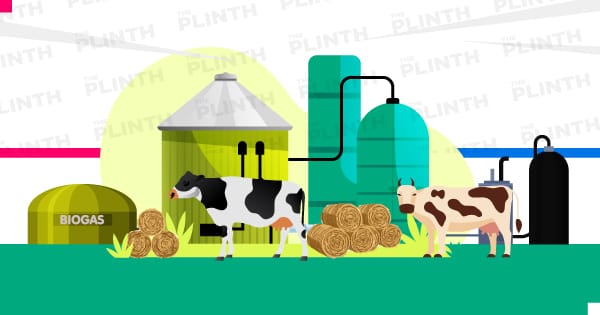
India's Compressed Biogas Moment Is Now, But Minus Its Feedstock
What?
India imports nearly 88% of its crude and roughly half its gas. When the Strait of Hormuz flared in early March 2026, none of those numbers changed. What changed was the price of ignoring them. Every percentage point of domestic gas substitution that had looked like a climate line item six months ago now reads as an energy-security one.
The shock has also sharpened attention on biofuels as a category, across the solid, liquid and gas spectrum. Ethanol blending is the visible retail story. Less publicised and much farther away from headline coverage is biogas.
For compressed biogas (CBG), the receiving infrastructure, CNG retail outlets, city gas pipelines and the blending mandate are substantially in place.
At India Energy Week 2026 in Goa on January 30, Petroleum Minister Hardeep Singh Puri had hailed CBG as one of the most grounded expressions of India’s energy transition. He cited 133 plants, a combined output of 926 tonnes per day (TPD), 410 retail outlets and 83 plants under construction.
The policy scaffolding exists. The Sustainable Alternative Towards Affordable Transportation scheme, or SATAT, launched in 2018, got the state-owned oil marketing companies, IOCL, BPCL, HPCL, GAIL and IGL, to issue Letters of Intent to buy CBG output.
Why?
The arrangement is not guaranteed take-or-pay: plants carry the risk of producing gas, and the oil companies agree to buy what they can actually absorb, not what plants can produce. The CBG Blending Obligation, announced in 2023, mandates 1% of CNG volume for FY26, rising to 5% by FY29; it was another incentive.
Nearly three years on, Puri's own figure of 133 plants against an original target of 5,000 describes the same pattern: the scheme generated paperwork faster than it generated plants.
What the headline numbers also do not show is that existing plants run at an average utilisation of around 35%, per the IEA's India bioenergy report. European biogas plants routinely exceed 80%.
Indian plants hover between 20% and 60%, not from technology failure but because feedstock arrives irregularly, at prices that can shift fast enough to make a plant unviable within a single season. Eight years after SATAT, 133 plants are operational against a target of 5,000.
Puri’s statement thus describes a sector at its beginning with the cadence of one approaching maturity. The 926 TPD being produced is less than 1.5% of India's estimated 62 million tonnes of annual potential.
The harder problem, it turns out, is not policy but getting consistent, affordable raw material to each plant gate, across all four seasons.

Rex Gelb spent a decade building HubSpot's paid engine. Now he's showing founders exactly how to do it.
On April 27th, get the framework to structure, launch, and scale paid media that drives pipeline, not just traffic. 20 minutes. Live Q&A. Free.

Geopolitics. Active conflict. Commodity shocks. Sentiment swings.
The forces reshaping markets in 2026 go well beyond economics, and the rules of strategic decision-making are being rewritten in real time.
The Core and EDGE Community invite a select group of senior leaders, founders, and investors to a closed-door conversation on navigating uncertainty led by financial journalist Govindraj Ethiraj.
Limited seats. By invitation only.
Rs 3.16 lakh core
That is the value of India’s textile and apparel exports in FY2025-26, marking a modest 2.1% year-on-year growth despite being one of the hardest hit sectors due to US trade tariffs, according to data by the Ministry of Textiles.
Context: Growth was supported by steady demand for ready-made garments (RMG) and continued policy backing through export schemes such as RoSCTL and RoDTEP, which helped the sector navigate uneven global conditions.
RMG remained the largest contributor, rising 2.9% to Rs 1.39 lakh crore, while man-made yarn and fabrics grew 3.6%. Cotton yarn, fabrics and handloom products were largely flat, indicating mixed momentum across segments. Among value-added categories, handicrafts (excluding carpets) recorded the strongest growth at 6.1%.
What’s Next: Export growth was geographically broad-based, spanning over 120 destinations with strong traction in markets like the UAE, Japan and Spain. Going forward, progress on free trade agreements with regions such as the UK, EU and EFTA is expected to improve market access, reduce tariff barriers and support deeper integration into global supply chains.
Iran Tightens Hormuz Grip
Iran's Revolutionary Guards reportedly seized two vessels in the Strait of Hormuz on Wednesday for alleged maritime violations, marking the first such seizures since the West Asia war erupted in late February. This comes as US President Donald Trump extended the ceasefire indefinitely with no sign of peace talks resuming.
The United States simultaneously halted a $500 million cash shipment to Iraq and suspended parts of its security cooperation with Baghdad, pressing the government over Iran-backed militia attacks on US facilities, Reuters reported.
Setting: The conflict is rippling through global boardrooms. Companies across consumer goods, travel, and mining warned this week of rising costs, supply chain disruptions, and weakening consumer confidence, compounding pressures from US tariffs already weighing on businesses before the war began.
Critical Moment: In India, the strain is quietly building. Kotak Institutional Equities warned that Hormuz crude flows are unlikely to normalise without a comprehensive truce, and with Indian basket crude at $120 per barrel, a retail fuel price hike of Rs 25–28 per litre may be warranted, though political considerations, particularly with state elections concluding April 29, are likely to delay and moderate any increase.
Tesla’s New Tactic
Tesla has launched a six-seater version of its Model Y in India to boost weak sales in the world’s third-largest auto market. The new Model Y L, priced at about Rs 62 lakh, targets families seeking larger, premium SUVs.
Catch Up Quick: Tesla has sold only around 350 units since deliveries began in September, far behind rivals like BYD, BMW and Mercedes-Benz. High import tariffs of about 100% have made Tesla cars significantly more expensive than in other markets, limiting demand to a niche segment. As well, consumers say there’s better, cheaper competitors like BYD and Audi in town, as The Signal Brief previously covered.
Pivot: Tesla is betting on a larger, three-row SUV format to better match Indian consumer preferences, even as overall EV adoption remains under 5%, slowing growth.
RBI Scrutinises Anthropic's Mythos
India's central bank is in talks with global regulators, domestic lenders, and government officials to assess risks posed by Anthropic's new artificial intelligence model Mythos, Reuters reported.
Overview: The Reserve Bank of India's preliminary assessment suggests Mythos could pose cybersecurity risks by accelerating the discovery and exploitation of software vulnerabilities — a concern shared by regulators across Asia, Europe, and the United States.
RBI officials have, over the past fortnight, consulted counterparts at the US Federal Reserve and the Bank of England on Mythos-related risks. The central bank may also seek direct engagement with Anthropic.
Setup: The RBI is separately preparing broader guidelines for banks entering enterprise partnerships with advanced AI models, insisting that all analytics based on Indian customer data complies with its 2018 domestic data localisation rules.
Diet Coke Crunch
Diet Coke is facing supply disruptions in India as the Iran conflict tightens global aluminium availability, according to a Reuters report. Iran accounts for roughly 10% of global aluminium production, and the disruption has squeezed supplies of beverage cans. That has hit Diet Coke particularly hard, as it is largely sold in cans in India.
Outcome: Coca-Cola is responding by pushing Coca-Cola Zero Sugar and other variants available in plastic bottles, which are not dependent on aluminium. India is a key growth market for the company, amplifying the impact of the disruption.
The Turning Point: Industry executives told Reuters that prolonged shortages could accelerate a shift in packaging and consumer preference, as companies prioritise formats with more stable supply chains.
Learn AI in 5 minutes a day

You don't have to scroll every AI thread, track every new tool, or watch every demo.
The Rundown AI breaks it all down for you — the latest AI news, tools, and tutorials in one free 5-minute email every morning.
Trusted by 2M+ professionals at Apple, Google, and NASA.
The Markets Dip as Peace Talks are a No Show
On Episode 854 of The Core Report, financial journalist Govindraj Ethiraj talks to Manas Majumdar, Partner and Leader Oil & Gas, Fuels & Resources at PwC India as well as Krishnan Sitaraman, Chief Ratings Officer at Crisil Ratings.
The markets dip as peace talks are a no show
Prices are rising now, across the board, what will a fuel price hike look like?
A status check on India’s energy imports nearing 2 months into the war
Heatwave forecasts renewed for India
Half of India’s infra push is being driven by unexpected sectors

✍️ Zinal Dedhia, Kudrat Wadhwa, Shubhangi Bhatia, Pritha Pahari | ✂️ Rohini Chatterji | 🎧 Joshua Thomas, Vishnu Rajeev
🤝 Reach 80k+ CXOs? Partner with us.
✉️ Got questions or feedback? Reach out.
💰 Like The Core? Support us.
