- The Core
- Posts
- Auto Supply Chains Begin To Crack
Auto Supply Chains Begin To Crack
In partnership with

Good Morning. The West Asia conflict has slowed exports and disrupted supply chains, and these constraints could soon hit India’s auto sector. While companies may be absorbing the shock right now, continued disruptions could spell trouble.
In light of the conflict, India has also prioritised households when it comes to cooking gas. But this decision has exposed a gap in the system that has existed for years. The policy covers piped gas. But much of India’s small industry and food economy that runs on LPG cylinders isn’t part of the piped-gas system.
India’s equity indices ended higher on Wednesday. The BSE Sensex closed at 76,704.13, gaining 633.29 points or 0.83%. The NSE Nifty50 closed at 23,777.80, gaining 196.65 points or 0.83%.
In other news, the rupee hit another record low. Meanwhile, India’s aviation regulator, the Directorate General of Civil Aviation (DGCA), doubles down on airlines charging extra for seats.
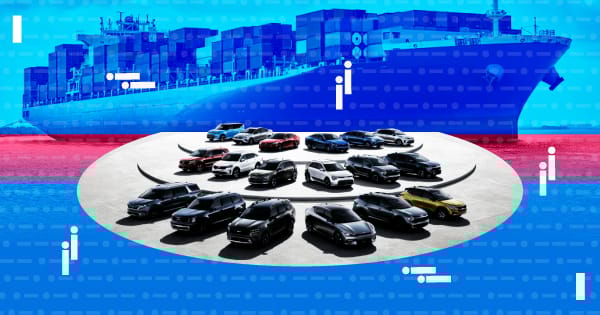
West Asia Crisis Sparks Export, Supply Risks for Auto Sector
What?
What began as a distant geopolitical conflict in West Asia is now translating into material bottlenecks for India’s automotive sector, characterised by a series of force majeure declarations from critical chemical producers like Andhra Petrochemicals and Tamilnadu Petroproducts. This shift could starve production lines of essential materials used in everything from car seats to dashboards.
Beyond the factory floor, the conflict has triggered a costly and time-consuming detour for exports, as ships sail south from India, and travel around the Cape of Good Hope at the southern tip of Africa before heading towards Europe.
This detour extends transit times by several weeks and results in multifold surges in freight rates. “The conflict has effectively frozen a billion-dollar export market for Indian auto components in the Middle East, while nearly $7 billion worth of shipments to Europe are facing delays,” Vinnie Mehta, Director General of Automotive Component Manufacturers Association of India, told The Core.
S&P Global estimates that nearly 1.7 lakh vehicle units exported annually to West Asia are now at risk, as vessels and containers become stranded in conflict zones.
Why?
The root of this systemic shock lies in India’s deep energy vulnerability: approximately 90% of imported LPG and over 68% of LNG flows through the volatile Strait of Hormuz. To ensure domestic energy security, the government has prioritised household LPG, inadvertently creating a raw material vacuum for downstream industries.
The primary risk for automotive manufacturing lies in gas-dependent processes—such as foundries, forging, casting, and paint shops—and an MSME supplier ecosystem that lacks the scale to pivot quickly.
The result is not a complete production halt, but intermittent disruptions and bottlenecks at specialised facilities, with the potential to cascade across supply chains.
Why It Matters?
Calling the crisis an "early warning signal" for the national economy, Bal Malkit Singh, Advisor and Former President of the All India Motor Transport Congress (AIMTC), suggests the disruption signals deeper economic risks. With transport activity slowing and input costs rising, the pressure is expected to spill over to MSMEs and consumers, potentially weighing on demand and the sector’s growth outlook for 2026.
Harshvardhan Sharma of Nomura noted that vehicle price hikes remain a possibility, and companies are likely to rely on cost controls and inventory buffers initially. Sustained increases in freight and energy costs could force calibrated price hikes, especially in lower-margin segments.
With luxury players already announcing April price hikes, how much longer can the mass market hold the line?

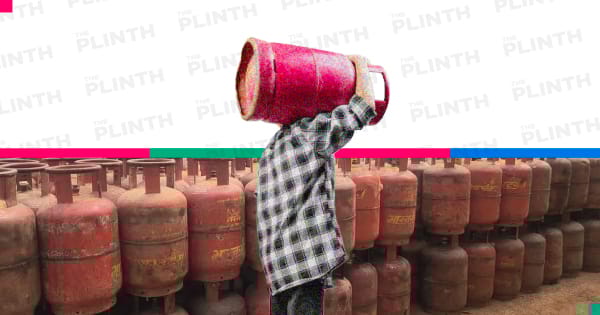
India’s Gas Pivot Amid West Asia Crisis Reveals Decades-Old Industrial Blind Spot
On the night of March 9, as Brent crude crossed $110 per barrel and LNG suppliers invoked force majeure on Hormuz-routed cargoes, the Ministry of Petroleum and Natural Gas (MoPNG) published the Natural Gas (Supply Regulation) Order, 2026. It sets a four-tier priority hierarchy for all natural gas in India, overriding the existing Gas Sale Agreements under Section 3 of the Essential Commodities Act, 1955. GAIL is the coordinator; the Petroleum Planning and Analysis Cell (PPAC) is the nodal agency.
For 33 crore domestic households, the Order is a guarantee. Tier I — domestic piped gas, CNG for transport, and LPG production — gets 100% of its six-month average consumption. Fertiliser plants get 70%. Grid-connected manufacturing and commercial city-gas users get 80%. The cut falls on petrochemical facilities, power plants, and refineries.
For the glass furnace in Firozabad, the dhaba in Dharavi, and the tile kiln in Morbi, none of this applies. The Order covers methane-based piped gas. Commercial LPG cylinders are propane-butane blends. A separate MoPNG directive dated 5 March diverted propane-butane to domestic LPG production and capped commercial users at 80% of their normal allocation. The Order then left them there.
The asymmetry is not an oversight. It is inscribed in the regulation.
India has no industrial LPG buffer stock, no priority allocation for cylinder-fed commercial users, and no pooled price mechanism to cushion the shock. To its credit, the new Order did not create these gaps. But it did reveal them.
Who The Order Leaves Behind
The users outside the Order's reach are not marginal. They are manufacturers whose fuel costs determine whether India's price advantage survives a sustained shock.
Glass furnaces run continuously at over 1,500°C and cannot switch feedstock for weeks. They are cylinder-fed, not grid-connected; the Order's Tier III protection for grid-connected manufacturing does not reach them.
Morbi tile manufacturers — roughly 70% of India's tile output — face a 5% cost push on glost firing; on thin export margins, that makes booked orders unprofitable.
Pharmaceutical sterile facilities running LPG autoclaves risk batch failures: Schedule M validation for alternative heat sources takes months, not days.
Here’s how I use Attio to run my day.

Attio is the AI CRM with conversational AI built directly into your workspace. Every morning, Ask Attio handles my prep:
Surfaces insights from calls and conversations across my entire CRM
Update records and create tasks without manual entry
Answers questions about deals, accounts, and customer signals that used to take hours to find
All in seconds. No searching, no switching tabs, no manual updates.
Ready to scale faster?
92.63
That’s the record low the rupee hit per one dollar–a record low. Its previous low came just last week, at 92.48 per dollar.
The Iran conflict has pushed up global crude oil prices sharply, with Brent crude rising nearly 40%, and even crossing $120 per barrel two weeks ago. For an economy that imports over 80% of its oil, this has directly weakened the rupee.
By the Numbers: The rupee has slipped 1.5% in recent sessions, alongside nearly $8 billion in pullout by foreign portfolio investors, who are moving money into safer dollar assets.
At the same time, the dollar has strengthened globally, as investors flock to it amid rising geopolitical uncertainty. This has added further pressure on emerging market currencies, including the rupee.
Impact: The Reserve Bank of India has likely intervened intermittently to smooth volatility, but has allowed the currency to adjust gradually to external shocks.
Future: Analysts say the rupee could weaken further if oil prices stay elevated and the conflict drags on, with some warning it could even approach 95 per dollar in a prolonged shock scenario.
Gas Push Amid Crisis
The government said it was prioritising domestic energy security as the West Asia conflict disrupted shipments through the Strait of Hormuz. With 1.6 million tons of crude and 320,000 tons of LPG currently stranded, the government said it was vetting fuel-supply requests from neighbours like Nepal and Sri Lanka, approving exports only if surpluses exist.
Overview: To combat India’s worst cooking gas crisis in decades, refineries have been ordered to maximise LPG production while slashing industrial sales.
Setting: In a major escalation on Wednesday, Iran’s Pars gas field, the world's largest natural gas deposit that Iran shares with Qatar, was hit. Reuters reported that Iran has warned neighbours to evacuate their energy installations.
This comes even as Israel said it had killed Iran’s intelligence minister and had authorised its army to target other Iranian authority figures that it can locate, Reuters reported. Meanwhile, Iran’s Foreign Minister Abbas Araqchi said the country’s nuclear stance remains unchanged, though the new leader hasn't yet affirmed the late Ayatollah Khamenei’s religious ban on weapons.
Amid the intensifying three-week war, US counterterrorism chief Joe Kent resigned, saying Iran posed no imminent threat to America and he could not support the ongoing war.
DGCA Tightens Passenger Norms
New passenger-centric norms announced by the Directorate General of Civil Aviation (DGCA) will require airlines to allocate at least 60% of seats free of charge, seat passengers on the same PNR together, and introduce transparent policies for carrying sports equipment, musical instruments and pets. This means that airlines will not be able to charge extra for all aisle or window seats as they do now.
Highlight: Airlines must also strictly adhere to passenger rights in cases of delays, cancellations and denied boarding, while prominently displaying these entitlements across websites, apps and airport counters in regional languages.
Context: The move is aimed at improving transparency, convenience and uniformity across carriers as India strengthens its position as the world’s third-largest domestic aviation market, with over five lakh passengers flying daily.
Residential Market Rebalances
India’s housing market is entering 2026 on a steadier footing after years of rapid expansion, with signs of a more disciplined and demand-driven cycle emerging. According to the CBRE report, the high-end market will continue to expand in 2026 and will be a volume driver. “This transition reflects growing aspirations for larger homes and rising disposable incomes, among other factors,” the report said.
Fast Facts: Demand continues to be anchored by end-users in key cities such as Mumbai, Bengaluru and Pune, aided by infrastructure upgrades and rising household incomes. At the same time, the clear shift towards premium housing is reshaping the market, with higher-value homes driving overall sales growth even as volumes stabilise.
Future: Amid ample liquidity, low mortgage stress and cautious new supply, the sector is expected to see stable sales in 2026, with quality projects continuing to attract buyers.
The Gold Standard for AI News

AI will eliminate 300 million jobs in the next 5 years.
Yours doesn't have to be one of them.
Here's how to future-proof your career:
Join the Superhuman AI newsletter - read by 1M+ professionals
Learn AI skills in 3 mins a day
Become the AI expert on your team
Markets Recover Over 2,000 Points
On Episode 826 of The Core Report, financial journalist Govindraj Ethiraj talks to Narendra Taneja, Chairman of the Independent Energy Policy Institute as well as Anindya Banerjee, Senior VP and Head of Commodity Research (Currency, Commodities and Interest Rates) at Kotak Securities.
Markets recover over 2,000 points, will they hold
No let-up in West Asia as bombing continues, as the US might resort to more desperate moves as opposed to expectations of pulling back
The rupee hits a new record low. What is the rupee tracking?
India’s gas shortages are compounded by unique distribution challenges

✍️ Zinal Dedhia, Kudrat Wadhwa, Shubhangi Bhatia | ✂️ Rohini Chatterji | 🎧 Joshua Thomas, Vishnu Rajeev
🤝 Reach 80k+ CXOs? Partner with us.
✉️ Got questions or feedback? Reach out.
💰 Like The Core? Support us.