- The Core
- Posts
- Apple’s Succession Signal
Apple’s Succession Signal
In partnership with

Good Morning. The elevation of John Ternus as CEO is a defining moment for Apple. Instead of chasing an AI visionary, it has chosen a steady operator rooted in its hardware legacy. The move revives a larger question for corporate boards. When disruption looms, what should companies prioritise?
For generations, Indians looked at diamonds as a status symbol and perhaps even a "forever" asset. But with the arrival of lab-grown diamonds and better financial knowledge, that myth is shattering. The diamond as an investment narrative is losing its lustre.
India’s equity indices ended higher on Tuesday. The BSE Sensex closed at 79,273.33, gaining 753.03 points or 0.96%. The NSE Nifty50 closed at 24,576.60, gaining 211.75 points or 0.87%.
In other news, Russian oil flows to India are likely to continue amid the West Asia crisis. Meanwhile, skewed rainfall in India could result in a “yield shock”.

The Ternus Pick Shows How Apple Sees The AI Era
When Apple announced John Ternus as the successor to Tim Cook on Monday, the tech world erupted into a highly predictable debate. Is a hardware guy the right person to lead the world's third most valuable company into the age of Artificial Intelligence?
The 51-year-old Ternus has spent 25 years at Apple — nearly half his life. He rose through the ranks to become Vice President of Hardware Engineering and then Senior VP in 2021.
When he officially takes the helm on September 1, with Cook transitioning to Executive Chairman, he will inherit an empire generating over $415 billion in annual revenue.
But Ternus is definitely not an artificial intelligence (AI) visionary or a software savant. And that is exactly what makes Apple’s choice so revealing — not just for Silicon Valley, but for corporate boards worldwide.
Tim Cook’s 15-year tenure will be remembered for its supply-chain mastery, lifting Apple’s market capitalisation by a staggering $3.6 trillion.
He oversaw the launch of the Apple Watch and AirPods, among others, massive successes, but also presided over the Vision Pro headset — a multi-billion-dollar flop — and a scrapped $10 billion autonomous car project.
The Internal Sceptic
In both failures, Ternus was reportedly the internal sceptic, with his instincts leaning toward caution and rigorous execution, a Bloomberg report said.
He has excelled at ensuring the relentless, high-quality annual iterations of the iPhone, iPad, and Mac.
Ternus’s most surprising and successful strategic departure was championing the $599 MacBook Neo, a budget laptop aimed at younger users that bucked Apple’s premium-only orthodoxy.
Yet, as a Forrester Research analyst, Dipanjan Chatterjee said in a blog post, Ternus "must resist the temptation of incrementalism that has plagued Apple of late. As Ternus assumes the helm, he must define Apple’s future as ferociously as he defends its past."
What Makes A CEO?
This brings us to a fundamental and evergreen corporate question: What factors should dictate the choice of a CEO?
Apple has made its calculation clear. It believes its core competence — and the source of its consumer worship — remains hardware perfection.
The integration of AI is viewed as a feature to be blended into that hardware, rather than a reason to abandon the company's manufacturing DNA.
This tension between defending the core and chasing the frontier is playing out globally, including in India.
For family-owned conglomerates like Reliance, succession is currently a complex transition of businesses and power to the next generation, where it remains to be seen if the third generation inheritors possess the first and second generation's aggressive chops.
But even professionalised, non-family businesses are facing profound succession dilemmas.
Consider India's private banking sector.
A report in Mint pointed out that major institutions like ICICI Bank, Axis Bank, Kotak Bank, and HDFC Bank are all navigating or preparing for leadership changes.
The founders and early leaders of these banks — figures like Aditya Puri and KV Kamath — were essentially entrepreneurs operating within a corporate structure. They injected fierce aggression and a win-at-all-costs mentality to capture market share.
But now, as Mint reports, there is a growing tendency to look at and elevate Chief Financial Officers (CFOs) to the top job.
Incidentally, HDFC Bank’s current CEO, who took over in October 2020, was its CFO earlier.
While that may not be the only reason for his promotion, the rationale is sound: regulatory environments are ever tighter, and there is a heightened premium on governance and reputational stability.
Elevating a CFO also signals an organisation is entering a more defensive, mature phase of its life cycle.
ICICI Bank is a prime example; its current CEO (not a CFO earlier) successfully stabilised an institution previously rocked by scandal.
Innovation Trumps Defence
But defensive leadership has limits. A growth market — whether in banking, computing devices, or consumer goods — eventually demands aggressive, front-facing leadership.
Defensive leaders must either transition back to a growth mindset or step aside when the stabilisation job is done.
Top-performing companies in India are currently logging double-digit growth, but not always by expanding the market.
Overall, private consumption has slowed, hurting sectors like fast-moving consumer goods (FMCG) and retail.
Reigniting consumption on the supply side requires radical innovation, not just careful management.
Look no further than the pharmaceutical industry, where weight-loss drugs have suddenly surged to become the highest-selling category by value in India — a disruptive prospect unimaginable just six months ago.
Apple’s elevation of John Ternus is a powerful reminder to shareholders and boards everywhere.
A company’s choice of CEO is a declaration of its strategic priorities.
Apple has decided it wants a master executor of hardware to navigate the AI revolution.
Boards must ask themselves: In the race for market leadership, are we hiring an entrepreneur to build the future, or an operator to manage the present?
For better or worse, Apple has placed its bet. Is your organisation doing the same?

Rex Gelb spent a decade building HubSpot's paid engine. Now he's showing founders exactly how to do it.
On April 27th, get the framework to structure, launch, and scale paid media that drives pipeline, not just traffic. 20 minutes. Live Q&A. Free.
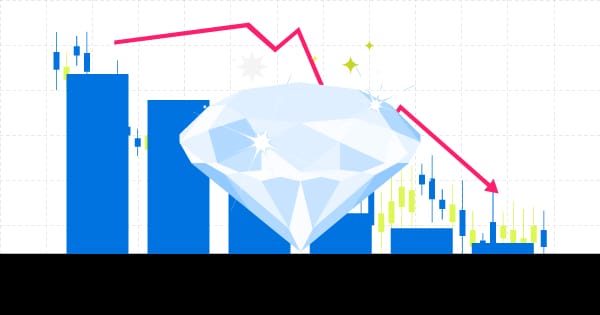
Lab-grown Surge: The Death of The Diamonds 'Forever' Narrative
What?
India’s relationship with diamonds is undergoing a significant shift. For decades, they occupied a unique space, not an investment like gold, yet widely believed to hold enduring value. They symbolised aspiration, status, and dependability, often marking life’s most important milestones. But that long-standing perception is beginning to change, especially among younger, more financially aware consumers.
For many families, diamonds were never bought purely for returns, but there was always an underlying assumption that they would at least retain their worth. Today, that belief is being questioned.
Why?
As financial literacy improves and access to alternative investment options expands, consumers are becoming more deliberate about where they allocate their money. Assets like equities, SIPs, and gold ETFs offer transparency, liquidity, and measurable returns, qualities that diamonds struggle to match.
“Buyers are moving away from seeing diamond jewellery as an ‘investment’ and instead appreciating it as a form of luxury consumption, one that holds emotional, aesthetic, and experiential value,” Mehul Jain, founder of Ekaraa, told The Core.
At the same time, the rise of lab-grown diamonds is accelerating this shift. Identical in composition to natural diamonds but significantly more affordable, they are challenging the idea of rarity that once underpinned the category’s value. What was once considered a niche alternative is now entering the mainstream, forcing both consumers and the industry to rethink what diamonds really represent.
Buyers today are more focused on utility, flexibility, and long-term wealth creation than on inherited notions of value. The industry, rather than resisting, is adapting by repositioning diamonds as symbols of personal expression and everyday luxury rather than financial security.
Yet, even as this narrative evolves, one question lingers: if diamonds are no longer seen as lasting assets, what happens to the very idea that made them so desirable in the first place?

Geopolitics. Active conflict. Commodity shocks. Sentiment swings.
The forces reshaping markets in 2026 go well beyond economics, and the rules of strategic decision-making are being rewritten in real time.
The Core and EDGE Community invite a select group of senior leaders, founders, and investors to a closed-door conversation on navigating uncertainty led by financial journalist Govindraj Ethiraj.
Limited seats. By invitation only.
Rs 24 lakh crore
That’s how much India’s infrastructure investment is set to rise through FY26 and FY27, marking a sharp 45 to 50% increase, according to Crisil Ratings.
Catch Up Quick: The jump reflects a strong pipeline across key sectors like roads, power, and urban infrastructure. Government spending continues to anchor this growth, but private participation is also expected to pick up as project viability improves and financing options widen.
Crisil notes that this scale-up comes as India pushes to sustain high economic growth through capital expenditure. Large, long-gestation projects will drive demand for funding, with a gradual shift towards more diversified financing sources beyond traditional bank lending.
However, execution will remain critical. Timely clearances, stable policy, and efficient capital allocation will determine whether these investments translate into on-ground assets.
The Lead: As The Core previously reported, India is also steadily moving towards more market-linked financing models, reducing reliance on banks over time.
Russia Oil Flows Cushion War Shock
Russian oil exports to India are set to stay near record highs in April and May, buoyed by a renewed US sanctions waiver, with arrivals expected to exceed 2 million barrels per day, Reuters reported. India imported a record 2.25 million bpd in March, making Russian crude 50% of its total imports. Indian refiners have already secured most May volumes through non-sanctioned entities.
Overview: The surge comes as Brent crude has reportedly risen 31% since the West Asia war on Iran began in February, straining India's import bill and triggering $18.6 billion in foreign investor outflows this year.
Setting: Moody's has warned that prolonged disruption could entrench inflation and strain the fiscal account, trimming India's GDP growth forecast to 6% for fiscal 2027.
Meanwhile, the US military reportedly seized an Iranian-linked tanker, deepening uncertainty over energy markets. While President Trump told CNBC that he does not expect to extend the Iran ceasefire.
India's Clean Energy Gap
India is facing a severe shortage of solar cells ahead of a June regulation requiring the use of domestically manufactured cells, Reuters reported. The North India Module Manufacturer Association, in a letter to the renewable energy ministry, flagged that India's production capacity of 25.6 GW falls far short of the 50 GW demand, with China supplying over 90% of requirements.
Critical Moment: Compounding the crisis, around 55% of domestically produced cells use outdated technology incompatible with new projects. Most locally made modules currently rely on Chinese-imported cells.
Setup: The association has urged a nine-month phased rollout, warning that immediate enforcement risks supply shortages, higher module costs, project delays, and setbacks to India's 2070 net-zero targets. Nearly 50 GW of new domestic cell capacity is expected to become operational within a year.
Monsoon Risk To Inflation
A weaker monsoon could push food inflation higher than expected in FY27, according to a report by QuantEco Research.
How We Got Here: The report said that current consumer price index (CPI) estimates of 4.5% do not fully account for monsoon risks. The India Meteorological Department has forecast rainfall at 92% of the long-period average, its most pessimistic early estimate in over two decades. It also sees a higher chance of deficient rainfall than the base case, pointing to downside risks.
The Turning Point: QuantEco links this to a likely El Niño later in the season, which could hurt crop yields. “Rainfall outcomes may be skewed to the downside,” the report said, warning of lower output, higher costs, and pressure on rural demand.
Learn AI in 5 minutes a day
You don't have to scroll every AI thread, track every new tool, or watch every demo.
The Rundown AI breaks it all down for you — the latest AI news, tools, and tutorials in one free 5-minute email every morning.
Trusted by 2M+ professionals at Apple, Google, and NASA.
✍️ Zinal Dedhia, Kudrat Wadhwa, Shubhangi Bhatia, Pritha Pahari | ✂️ Rohini Chatterji | 🎧 Joshua Thomas, Vishnu Rajeev
🤝 Reach 80k+ CXOs? Partner with us.
✉️ Got questions or feedback? Reach out.
💰 Like The Core? Support us.

id: 2026-04-21-18:45:05:114t